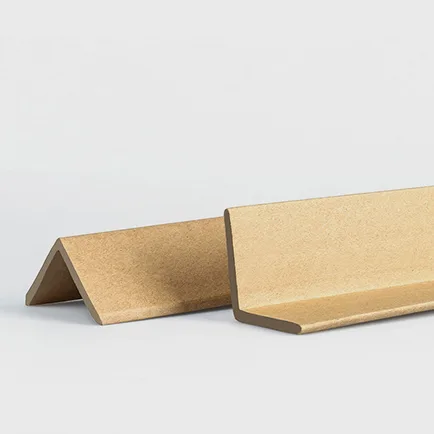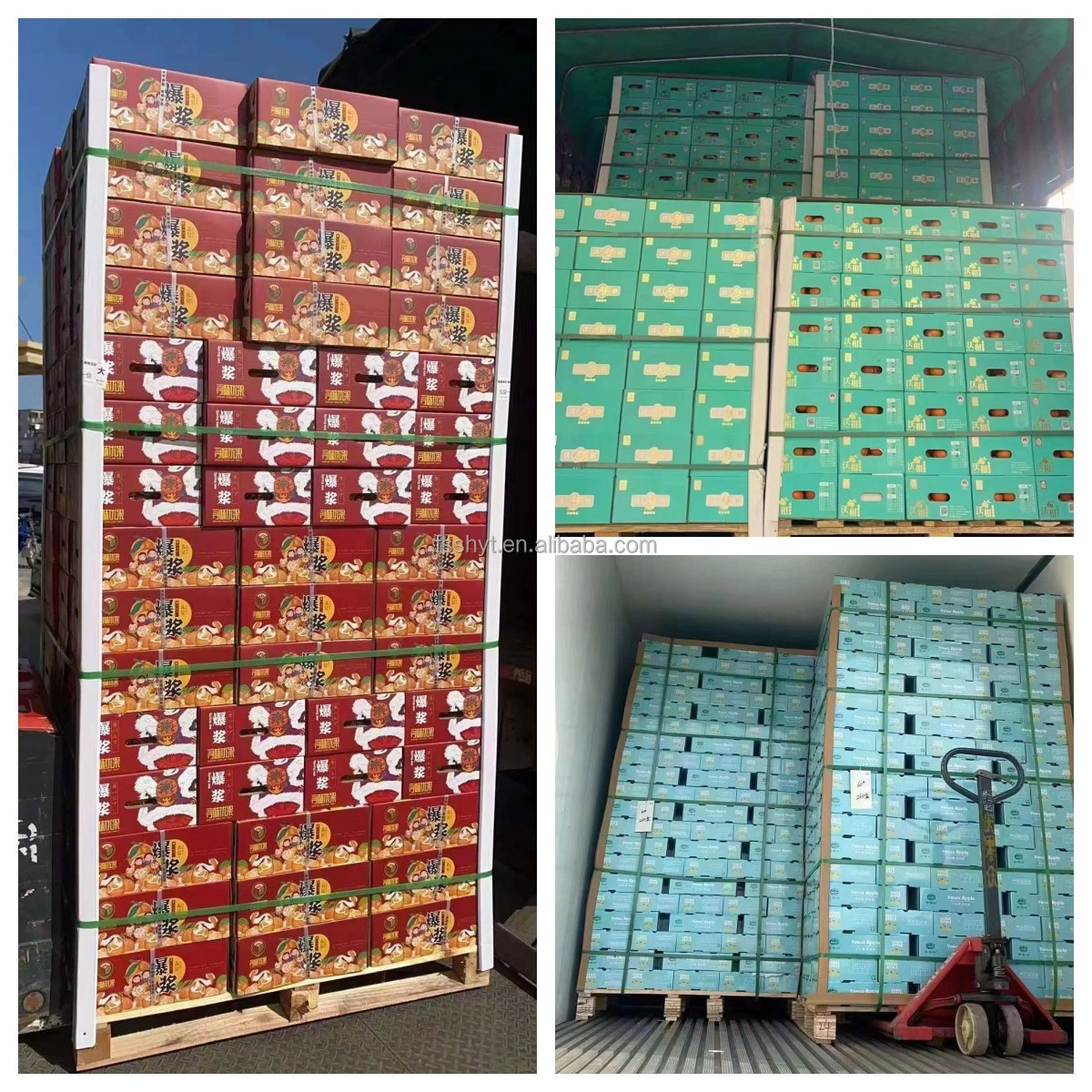
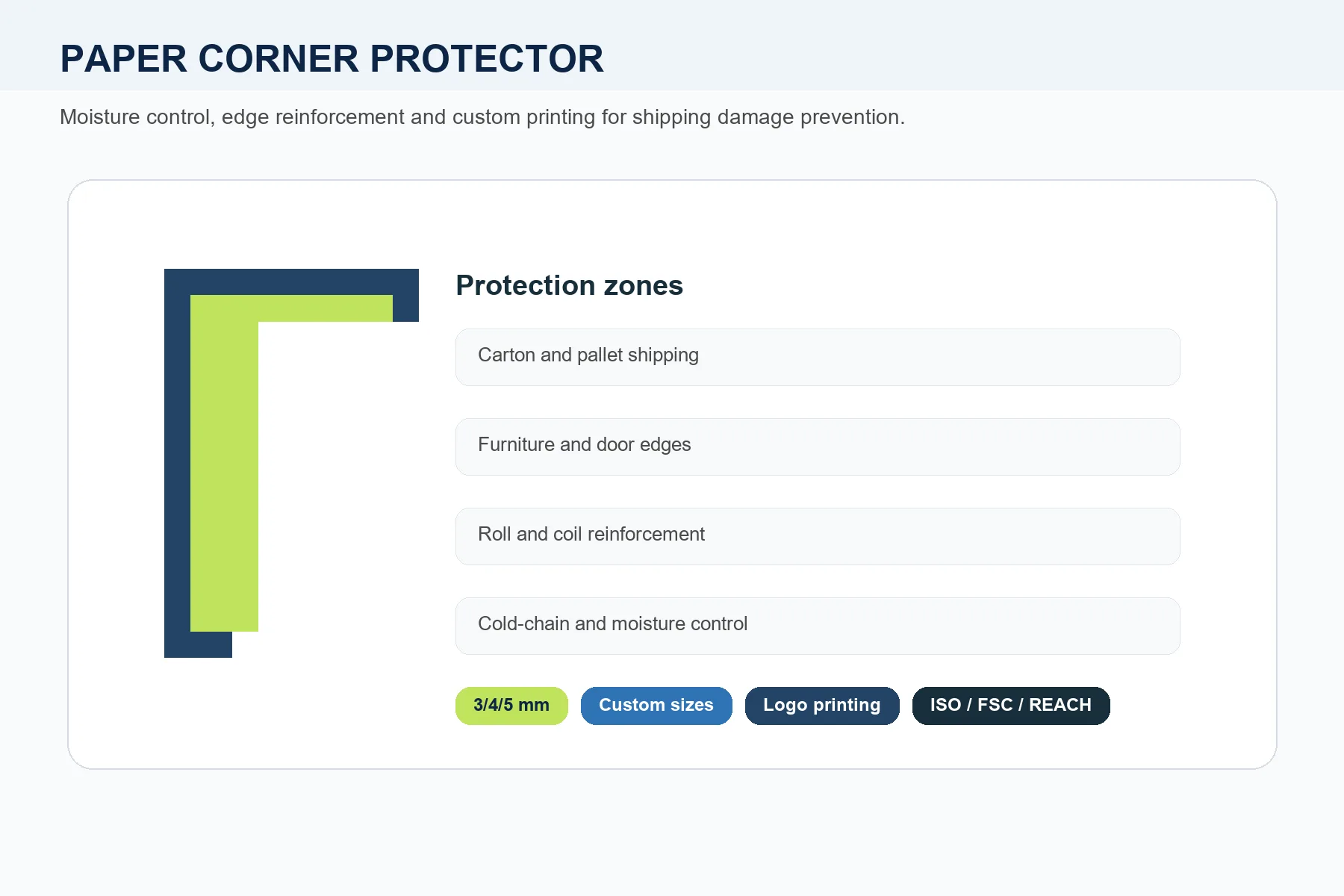
A paper corner protector may look simple, but the buying decision affects cargo stability, product appearance and damage rates. Buyers searching for a paper corner protector manufacturer or wholesale supplier usually need custom sizes, reliable thickness and export packing that can survive long routes. The right supplier should help match shape, leg length and thickness to the real load.
This guide explains how to compare paper corner protectors for wholesale and custom orders, with special attention to pallet loads, carton edges, panels and moisture control.
What to define before asking for a quote
- Shape: L, V, U, curved or custom profile.
- Leg length, total length and thickness.
- Cargo type, pallet weight and strap position.
- Kraft, white, printed or branded surface.
- Export route, humidity risk and packing method.
A standard protector can be enough for ordinary carton pallets, but custom protectors become important when the cargo is heavy, the edge is broad or the route is long. A small size difference can change how the protector sits under strap tension.
Thickness and leg length
Thickness gives the protector stiffness. Leg length controls how much surface area is covered. Heavy pallet loads, wide product edges and high strap tension usually need stronger or wider protectors. Lighter cartons may be protected by standard sizes. The buyer should test the protector on the real cargo instead of approving it only by hand feel.
Wholesale price factors
Wholesale price depends on paper grade, thickness, length, order quantity, printing, packing and moisture-control requirements. Buyers should compare the whole package, not only the unit price. Poor packing can deform protectors before they are used, and weak protectors can lead to much higher cargo damage costs.
Moisture control for export routes
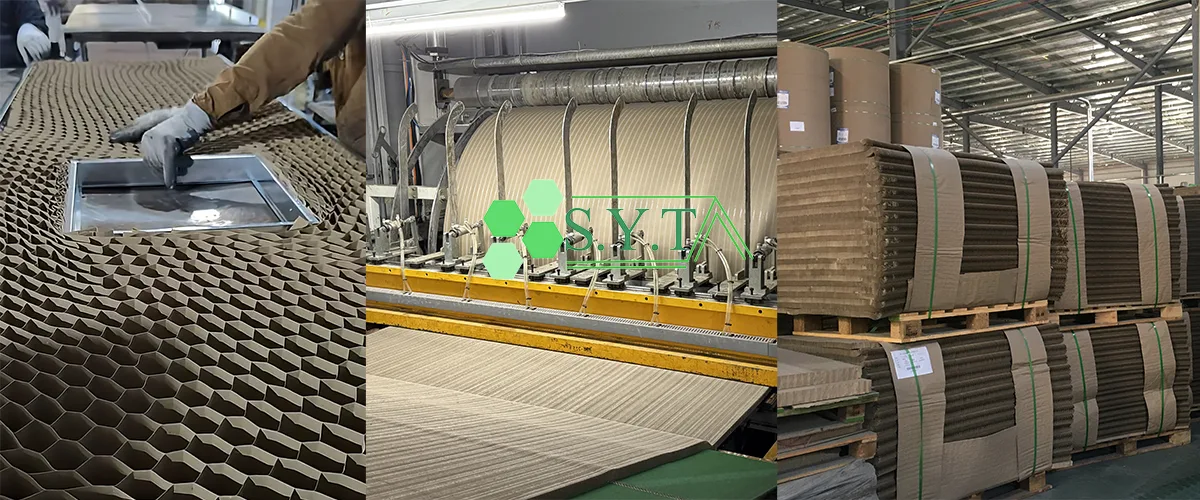
Because paper corner protectors are paper-based, humidity management matters. Sea freight, rainy-season shipping and long warehouse storage can affect product stiffness. Ask whether the factory dries finished goods, uses suitable cartons, controls storage conditions and can add desiccant or improved container loading when needed.
Standard vs custom protectors
Standard sizes are useful for stable carton pallets and routine warehouse protection. Custom protectors are better when the product edge is wide, the cargo is heavy, the packaging must look branded or the strap position creates concentrated pressure. Custom length can also reduce on-line cutting and make packing work more consistent.
If the buyer is unsure, request two or three sample options and test them on the same pallet. The correct protector should stay in place after tensioning, cover the vulnerable edge and avoid unnecessary waste.
Receiving inspection checklist
- Measure leg length, thickness and total length.
- Check straightness, surface cleanliness and print clarity.
- Confirm carton packing and moisture condition.
- Run a short strap test on the actual cargo edge.
How corner protectors work with PET strap
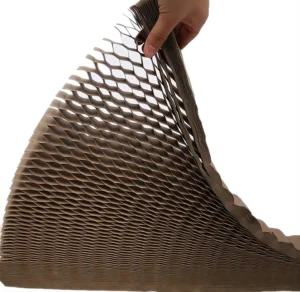
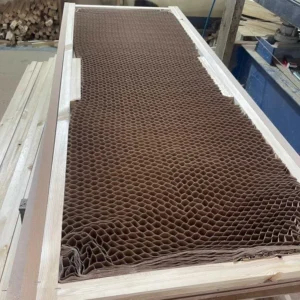
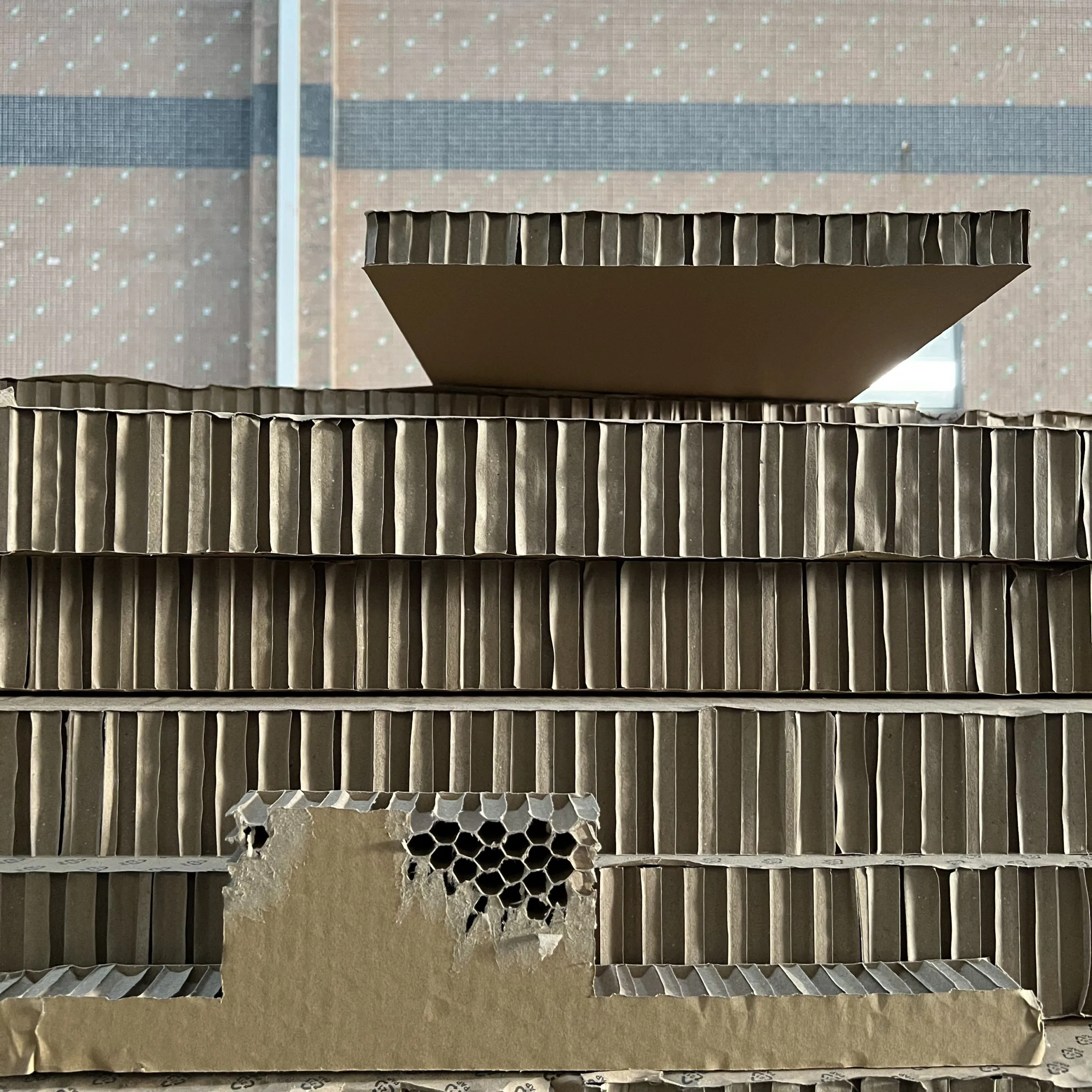
Corner protectors and PET strap should be specified together. The protector spreads strap pressure and helps the strap hold the load without cutting into carton edges. For layered products or fragile surfaces, add honeycomb cardboard pads or sheets to improve the full packaging stack.
FAQ
Can paper corner protectors be printed?
Yes. Logo printing and color options are common for branded or organized export packaging.
Are they suitable for heavy pallets?
Yes, when thickness, leg length and paper grade are matched to the load and strap tension.
What should I send for a custom quotation?
Send product photos, pallet weight, edge dimensions, strap pattern, target thickness, quantity and delivery schedule.
Conclusion
A good paper corner protector manufacturer helps buyers prevent edge damage with the right profile, not just a low price. Send your packaging photos through the SYTPACK contact page for a custom size recommendation.