Paper corner protectors are deceptively simple. A buyer sees a folded paper profile and may assume the decision is easy. In practice, the right corner protector can make the difference between a load that arrives clean and stable and a load that suffers dents, crushed edges, or moisture problems on the route. For export packaging, that matters because the edge is often the first place where damage appears.
SYTPACK’s product page for paper corner protectors shows a fairly complete offering: multiple shapes, standard and custom sizes, printing options, moisture control features, and support for industrial packaging workflows. That makes the product useful not only for carton shipping, but also for pallets, furniture, doors, panels, rolls, and cold-chain loads. Buyers should treat it as a structural protection component rather than a minor accessory.
What a paper corner protector is actually doing
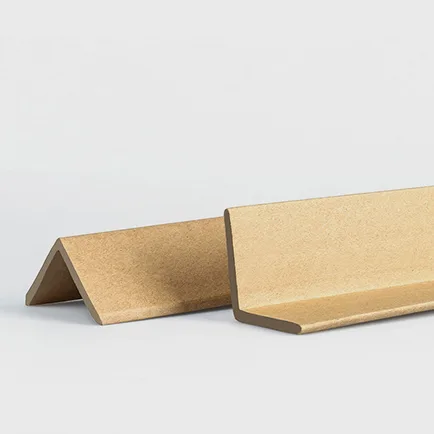
The main job of a paper corner protector is to move pressure away from vulnerable edges. Strapping pressure, stacked cartons, repeated handling, and pallet compression all tend to concentrate force at the corners. By adding a rigid paper profile, the load spreads that force across a wider area. The result is fewer dents, less crushing, and better stack stability.
That function sounds simple, but it plays a major role in logistics. A corner protector can help keep the package visually intact, support the strap without digging into the load, and make the pallet easier to handle in warehouses and containers. In other words, it does more than protect the corner. It helps keep the package shape honest.
Shapes buyers usually ask for
The shape matters because different products expose different edges. SYTPACK lists L and V styles, U-shapes, curved forms, and clip styles. That range is useful because a carton edge, a furniture panel, and a roll edge are not the same problem. The better the shape matches the cargo, the less waste and the better the fit.
- L-shape for standard corner reinforcement
- V-shape when a lighter corner profile is enough
- U-shape for panel edges or broader surface coverage
- Curved or clip forms for special product geometry
- Puzzle-type or custom shapes for furniture and branded packaging
How thickness and leg length should be chosen
Thickness drives stiffness and pressure resistance. SYTPACK lists standard thicknesses of 3, 4, and 5 mm with custom options up to 6 to 10 mm. That gives buyers a sensible range for ordinary cartons, heavier palletized loads, and more demanding applications. A thicker product is not always necessary, but a thin protector on a heavy load is usually a false economy.
Leg length, or width, determines how much surface the protector can cover. Wider leg lengths help distribute strap pressure and support larger edges. Shorter leg lengths are useful when space is tight or when the package geometry is narrow. The key is to select enough coverage to solve the real problem without adding unnecessary material.
Moisture control is not optional in export freight
Paper-based protection works best when moisture is managed correctly. For sea freight, humid warehouses, or long transit cycles, the manufacturer’s drying, packing, and loading process becomes part of the product’s value. SYTPACK’s page highlights drying rooms, desiccant use, sealed loading, and moisture monitoring. Those are not decorative details. They are what allow the corner protector to remain useful after a long trip.
Buyers should ask how the material is dried before packing, how the finished products are protected in container loading, and whether the company has a procedure to reduce humidity exposure. In export packaging, this is the difference between a protector that looks good in the sample room and one that performs in the real shipment.
Printing and branding options
Custom printing is important when the buyer wants the packaging to look organized, branded, or premium. A printed corner protector can support the customer’s identity while still serving a functional purpose. This is useful for retail goods, furniture, and export programs where packaging appearance is part of the brand promise. The buyer should still keep the mechanical requirements first, but branding is often a valuable second layer.
For some programs, even a simple logo or one-color print can make the load easier to identify in the warehouse and reduce mix-ups during fulfillment.
How corner protectors fit into a complete shipment system
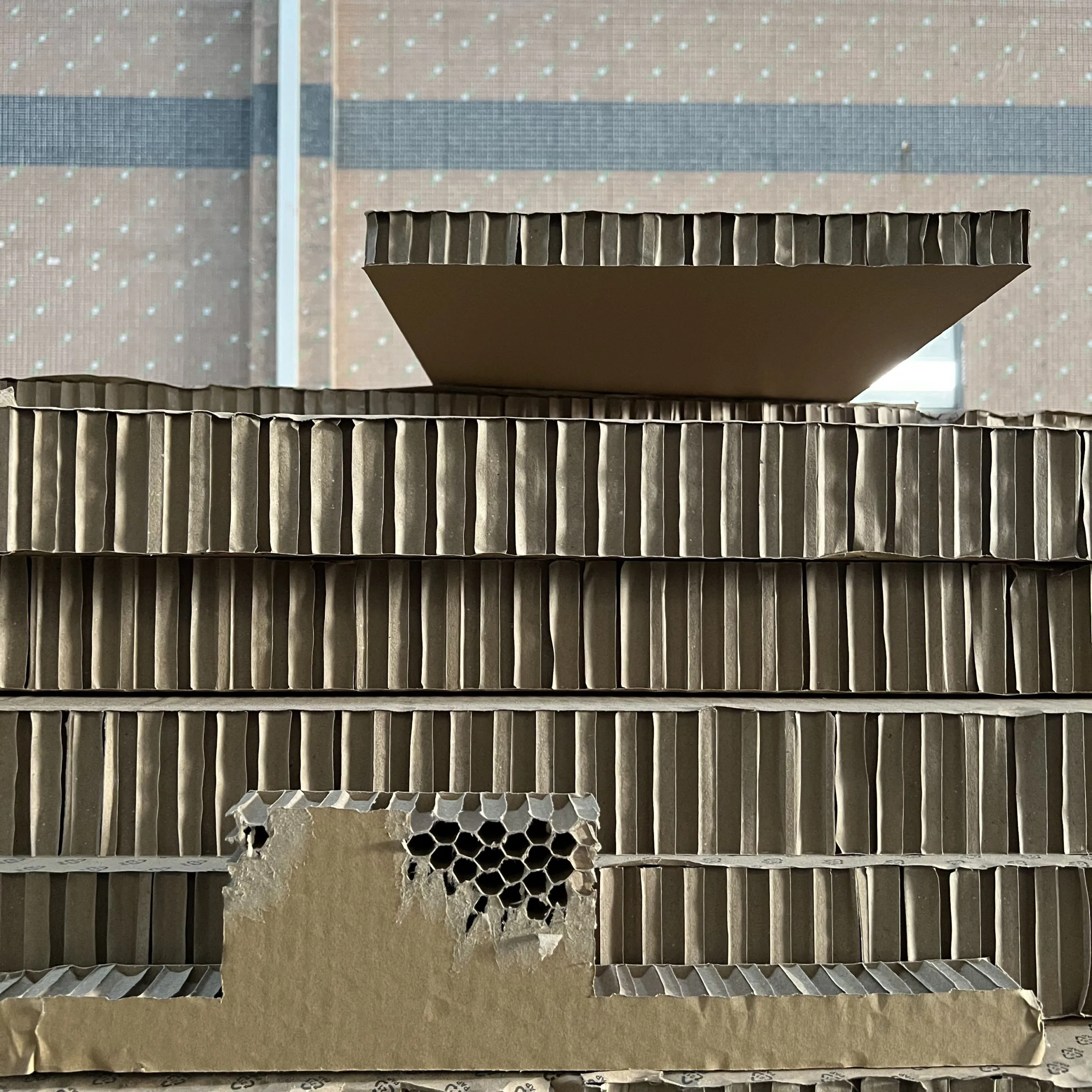
Corner protectors work best when they are not used alone. They are part of a broader packaging system that may also include PET strap, honeycomb cardboard, pallets, cartons, and internal supports. In a well-designed shipment, each component does a different job: one protects the edge, one holds the load together, and one adds structural support. That system approach reduces damage more reliably than any single component can by itself.
- Use the corner protector to spread strap and stack pressure.
- Use PET strap to hold the load in place.
- Use honeycomb cardboard or core material when a structural layer is needed.
- Use the outer carton or pallet design to complete the protection system.
Typical industry uses
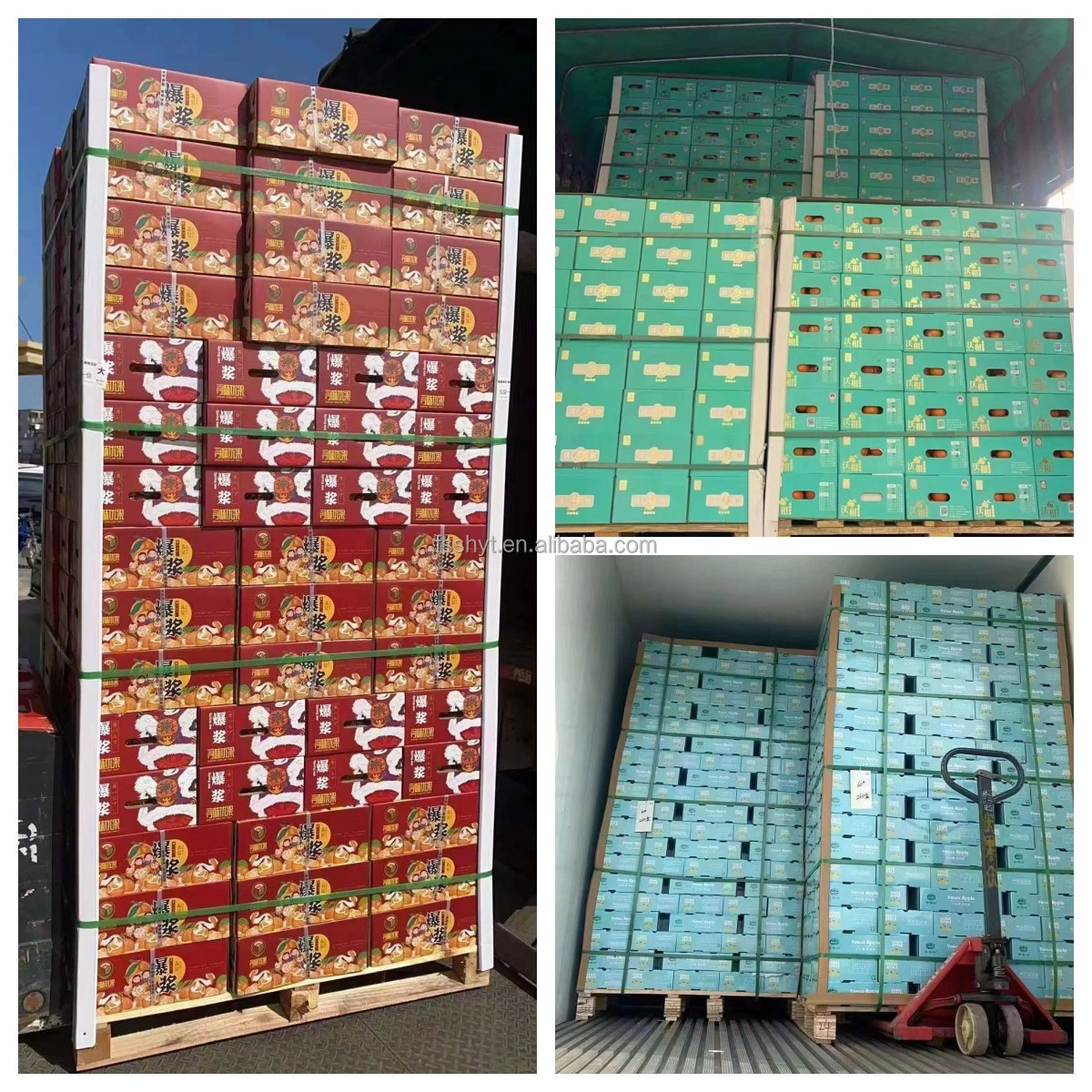
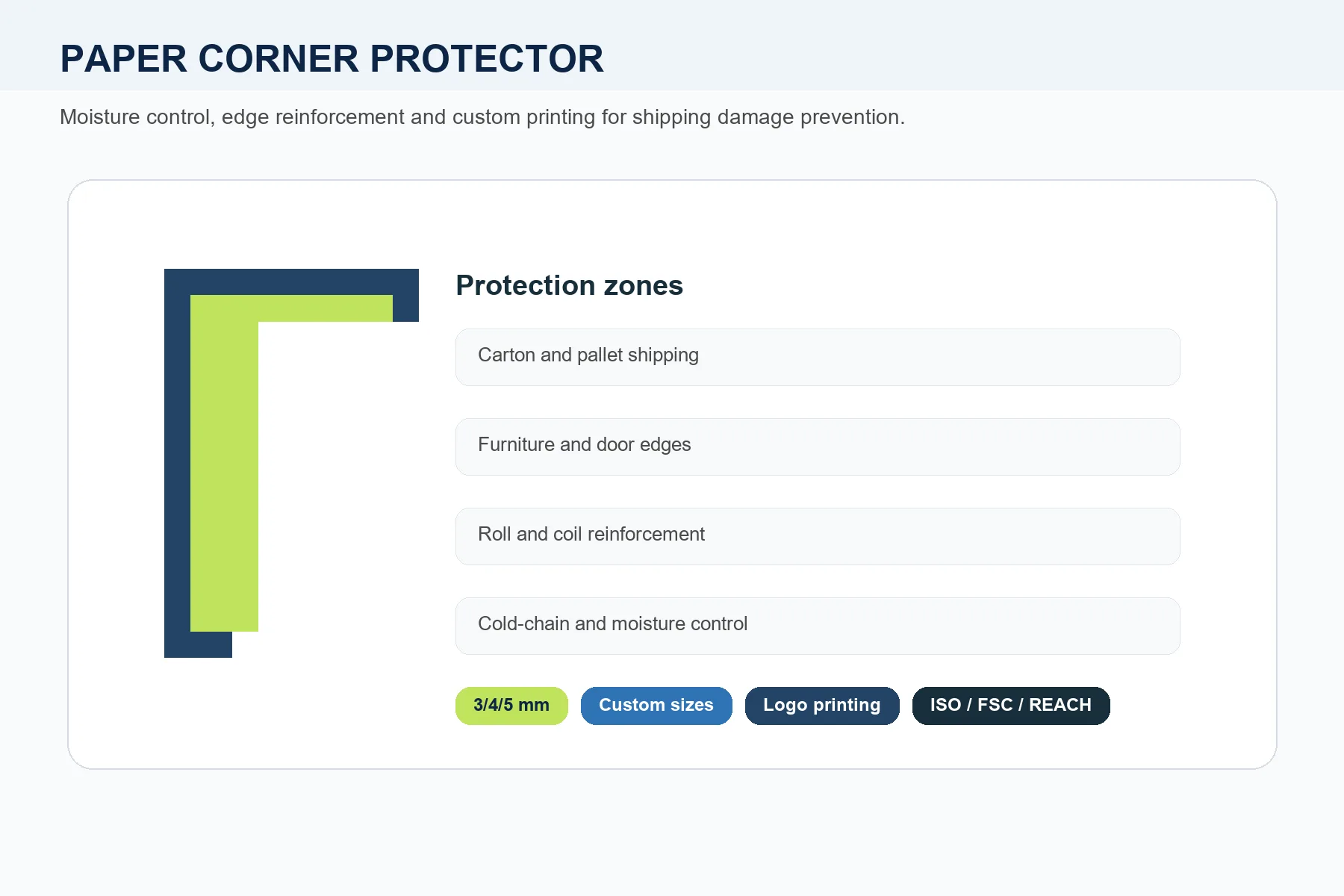
Paper corner protectors are used in cold chain fruit shipments, carton and pallet shipping, door and frame protection, roll and coil protection, panel edges, and furniture corner reinforcement. That variety is helpful because it shows how broadly the material can be applied. The basic physics are the same, but the size and shape need to match the cargo.
For example, a fruit pallet may care about moisture resistance and stable stacking. A door package may care about surface quality and edge sharpness. A coil may care about curved or wrap-friendly support. A furniture panel may care about clean appearance and branding. A good supplier can adapt the product to each of those conditions.
What to ask before ordering
A proper RFQ should cover shape, thickness, width, length, paper grade, printing requirement, and the expected shipping environment. Buyers should also specify whether the product is for one-time export or repeated mass shipment. That can influence packaging format, carton size, and moisture control approach. If the supplier knows the shipment route and product category, the recommended specification usually gets much better.
- Product shape and target cargo
- Thickness and leg length
- Paper grade and load duty
- Printing or logo requirement
- Humidity and shipping route conditions
- Sample lead time and packaging format
Common mistakes buyers make
The first mistake is choosing a protector that is too narrow for the strap pressure or load size. The second is ignoring humidity and assuming all paper products perform the same way in export transit. The third is treating custom printing as a cosmetic add-on instead of part of the operational system. The fourth is not checking how the protector works with the rest of the package. A corner protector that looks fine by itself can still fail in a badly designed pallet stack.
Good procurement prevents those errors by asking for the actual route, actual load, and actual use scenario. That is much better than ordering from a catalog picture alone.
How SYTPACK positions the product
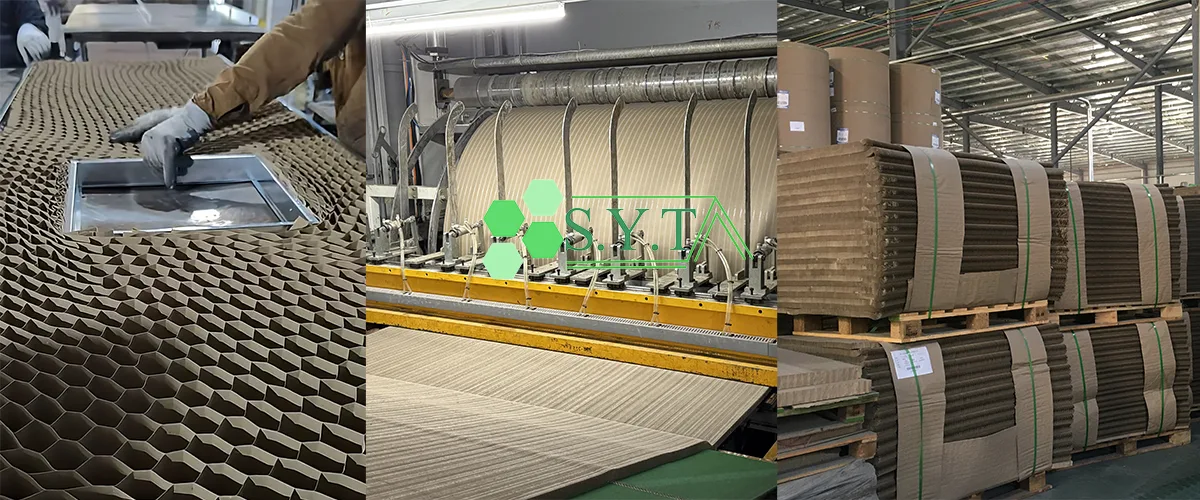
SYTPACK presents the paper corner protector as a customizable, certified, export-oriented packaging solution. The page highlights factory capacity, quality compliance, and moisture control, which are exactly the kind of points that matter to an industrial buyer. If the buyer wants a single source for paper-based protective packaging, that positioning is useful because it suggests the company can support edge protection, structural board, and strapping in one procurement flow.
For a closer look, use the paper corner protector page and the contact page to ask for a custom sample.
FAQ
Are paper corner protectors strong enough for export freight?
Yes, if the thickness and leg length are matched to the load and the shipping conditions. They are widely used in export packaging.
Can they be printed with a logo?
Yes. Printing is a useful option when appearance or product identification matters.
Do they help with moisture control?
They do not replace moisture management, but they work well with proper drying, desiccant, and sealed loading practices.
What should buyers request first?
Shape, thickness, size, and a sample matched to the cargo are the best first steps.
Conclusion
Paper corner protectors are small pieces of the packaging system with outsized impact. When their size, shape, and moisture handling are chosen correctly, they reduce damage, improve pallet stability, and help export shipments arrive in much better condition. For B2B buyers, that is a low-cost way to protect much higher-value goods.
How to choose between standard and custom corner protectors
Standard corner protectors are often suitable for ordinary cartons and stable pallet loads, but custom protectors become important when the cargo is heavy, unusually shaped, brand-sensitive, or exposed to long export routes. A standard size may protect the visible edge, but a custom width or thickness may be needed to spread pressure correctly. For example, a furniture panel, a door frame, and a cold-chain fruit pallet each place stress on different parts of the package.
Custom length can also reduce waste. If a protector is too long, operators may cut it on the line and create inconsistent results. If it is too short, the exposed edge may still be damaged. A custom length that matches the real product can improve both appearance and protection while speeding up packing work.
- Use standard sizes for stable carton pallets and routine warehouse protection.
- Use wider leg lengths when strap pressure is high or the cargo edge is broad.
- Use thicker protectors for heavy stacking or rough transit conditions.
- Use U-shape or special profiles for panels, frames, and exposed product edges.
- Use custom printing when identification, branding, or premium presentation matters.
Moisture and container loading checklist
Because corner protectors are paper-based, moisture control should be part of the sourcing conversation. The buyer should ask whether the products are dried before packing, how cartons are stored before shipment, whether desiccant is used, and how the container is sealed. These details matter most for sea freight, rainy-season shipping, and long storage periods. A product that is strong at the factory should remain strong after the route.
A practical container-loading checklist includes dry finished goods, sealed cartons, desiccant where required, moisture-blocking door treatment, and a loading plan that prevents crushing. The corner protector is supposed to protect the cargo; it should not be the item that gets damaged first because the loading method was careless. This is one reason buyers should prefer suppliers that understand export packing rather than only local delivery.
Receiving inspection for paper corner protectors
When the shipment arrives, the buyer should check thickness, leg length, total length, straightness, surface cleanliness, print clarity, and packing condition. A few samples should be placed on the actual product edge or pallet load to confirm fit. If the protector is used with strap, the buyer should run a short packing test to make sure the strap does not cut into the edge and that the protector stays in position after tensioning.
The buyer should also keep approved samples and photos for future comparison. Packaging components are often reordered many times, and a retained sample makes it easier to confirm that the new batch matches the previous one. That is especially useful when the order includes custom printing, special thickness, or a non-standard shape.
How to combine edge protection with other SYTPACK products
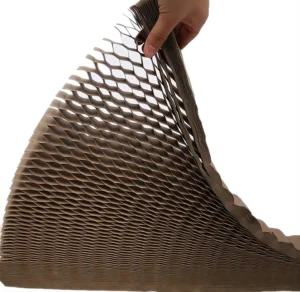
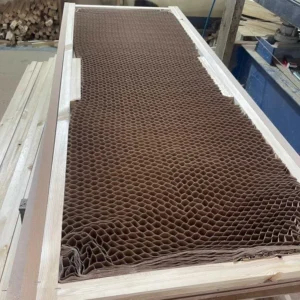
Paper corner protectors are strongest when they are combined with the right surrounding materials. A buyer can use PET strap to hold the load, honeycomb cardboard to add structural layers, and honeycomb paper core when internal filling or panel reinforcement is required. This system approach is particularly useful for export programs because it reduces the number of weak points in the package.
For a custom recommendation, send cargo dimensions, weight, photos, and route conditions through the contact page. That gives the supplier enough information to recommend shape, thickness, leg length, printing, and packing method together instead of treating each decision separately.
Practical reorder planning
For repeat paper corner protector programs, buyers should keep an approved specification sheet with shape, thickness, leg length, total length, paper grade, print requirement, packing method, and target product use. This prevents confusion when different factories, warehouses, or sales teams request the same protective component. A small difference in leg length or paper duty can change how the protector sits on the load.
Buyers should also record which customer, product line, or shipping route uses each specification. When a new shipment is planned, the team can select the proven protector quickly instead of testing from zero again. This is especially helpful for export packaging because route conditions, humidity, and pallet handling patterns often repeat across orders.