Introduction
Export pallet shipping puts products through a long and unpredictable journey. A pallet may be loaded by forklift, stacked in a warehouse, moved into a container, shipped by sea, unloaded at a port, transferred to a truck, and finally delivered to a distributor or end customer. During this process, even strong products can be damaged if the packaging system is not properly designed.
Common problems include crushed carton corners, leaning pallets, collapsed boxes, surface scratches, vibration damage, strap marks, and compression during long-distance sea freight. In many cases, the issue is not that the packaging material is too weak. The real problem is that the packaging was designed as separate materials rather than a complete protective packaging system.
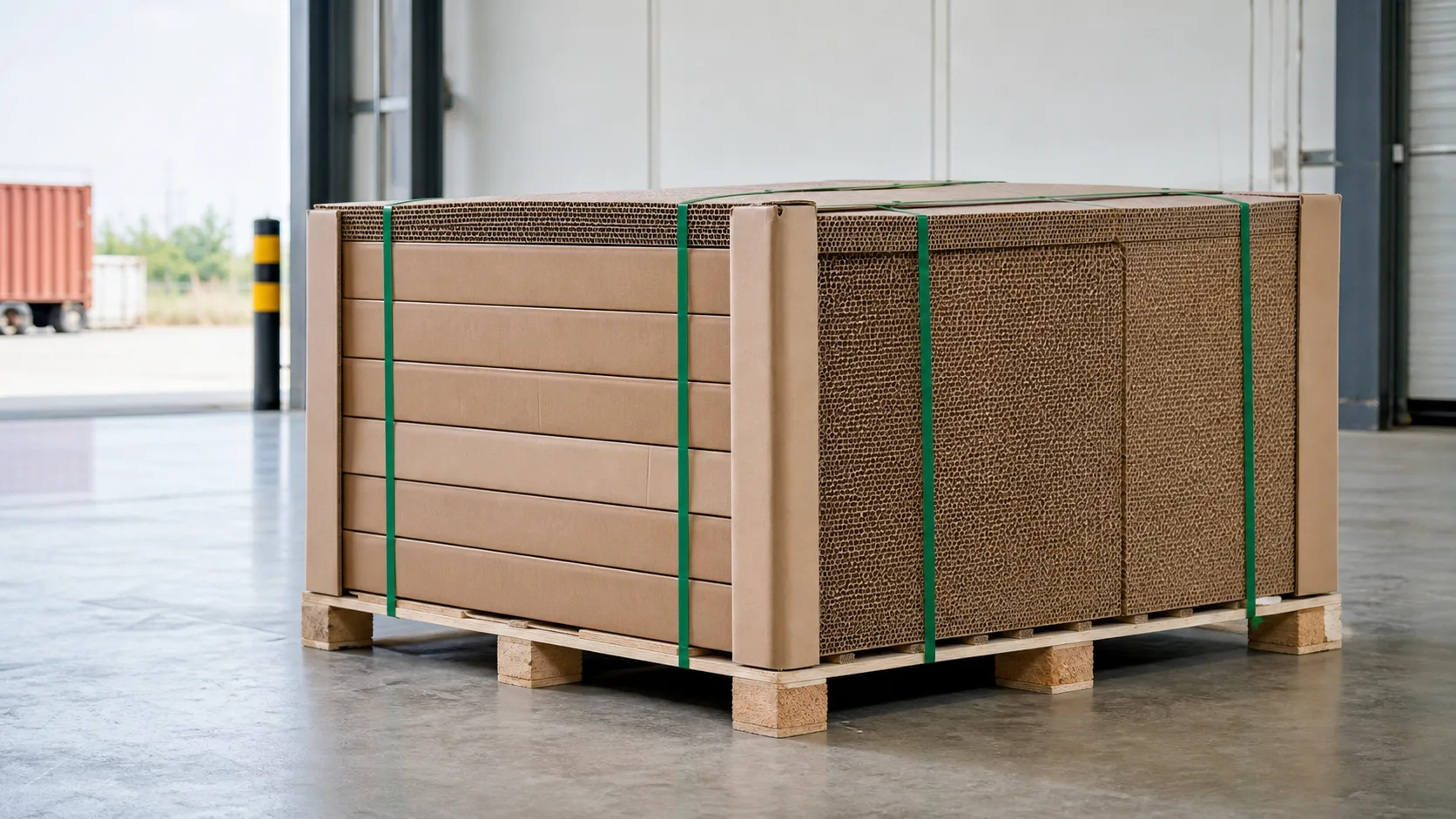
For export pallet packaging, a good system should protect the product, stabilize the pallet load, reduce handling damage, control packaging cost, and support efficient loading. Materials such as paper corner protector, honeycomb cardboard, PET strap, void filling materials, and custom protective packaging should work together instead of being selected independently.
This guide explains how B2B buyers, packaging engineers, factory purchasing managers, and logistics teams can choose the right protective packaging system for export pallet shipping.
What Is a Protective Packaging System?
A protective packaging system is a structured combination of materials designed to protect goods during handling, storage, and transportation. Instead of relying on one material, such as stretch film or carton boxes, the system uses different layers of protection for different risks.
A complete export pallet protection system usually includes the following elements.
Edge Protection
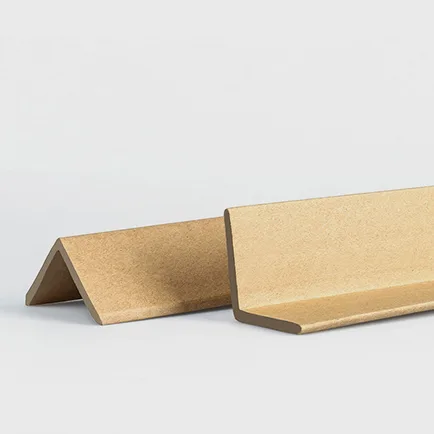
Edges and corners are often the first areas to be damaged during pallet handling. Paper corner protectors help reinforce carton edges, board edges, furniture panels, doors, glass packaging, and palletized goods. They also prevent PET strap or other strapping materials from cutting into the cartons.
Surface Protection
Large flat products such as furniture panels, doors, glass, boards, home appliances, and metal parts need surface protection. Honeycomb cardboard can be used as a lightweight protective board, separator, liner, or cushioning layer. It helps distribute pressure and reduce direct contact damage.
Load Stabilization
A pallet may look stable when it leaves the factory, but it can shift during long-distance shipping. PET strap, stretch film, corner protectors, and proper stacking design help keep the pallet load stable. Load stabilization is especially important for heavy cargo, tall pallets, and export shipments with multiple handling stages.
Void Filling
Empty space inside a carton or between products can cause movement during shipping. Honeycomb paper materials, paperboard inserts, and custom packaging structures can fill these spaces and reduce vibration damage.
Custom Packaging Design
Export packaging should match the product size, weight, shape, shipping method, and destination requirements. A custom protective packaging design can reduce material waste, improve container loading, and lower the total cost of damage, replacement, and claims.
Why Export Pallet Packaging Often Fails
Many export packaging problems happen because companies focus on individual materials instead of system performance. A buyer may choose a cheaper carton, thicker film, or stronger strap, but still face high damage rates because the full pallet structure is not balanced.
Focusing Only on One Packaging Material
Using one strong material does not guarantee full protection. For example, PET strap can hold a pallet tightly, but without paper corner protectors, the strap may cut into the cartons. Honeycomb cardboard can protect surfaces, but if the pallet is not properly stabilized, products may still shift during transportation.
Ignoring Pallet Weight and Stack Height
A light pallet and a heavy pallet need different packaging structures. The higher the stack, the more important compression resistance, edge protection, and load stability become. If the lower cartons cannot handle the weight above them, the pallet may collapse during storage or container shipping.
Not Considering the Shipping Method
Air freight, truck delivery, sea freight, and multimodal transport all create different risks. Export sea freight often involves longer transit time, higher stacking pressure, moisture exposure, and more handling steps. Packaging that works for domestic delivery may not be suitable for international pallet shipping.
PET Strap Cutting Into Cartons
PET strap is widely used because it provides strong load holding force. However, when it is applied directly onto cartons or product edges, the pressure can create marks, deformation, or cuts. Paper corner protectors help distribute the strap force and reduce local pressure.
No Edge Protection
Edges are vulnerable during forklift handling, pallet movement, stacking, and unloading. Without proper edge protection, cartons can deform, panels can chip, and product corners can be damaged before reaching the customer.
Wrong Cushioning Thickness or Structure
Using thicker packaging does not always mean better protection. A material that is too soft may compress too easily, while a material that is too rigid may transfer impact directly to the product. The right protective packaging system should match cushioning, compression resistance, and load stability.
Paper Corner Protector: Protecting Edges and Improving Pallet Stability
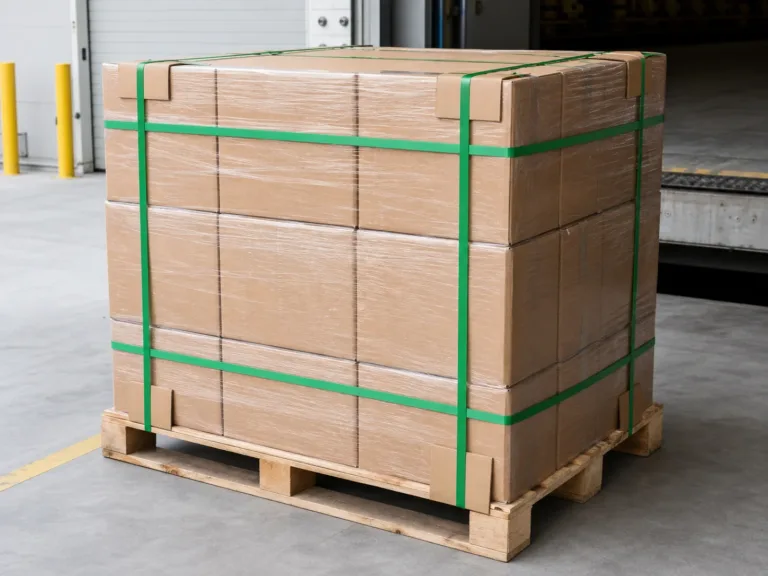
Paper corner protector is one of the most practical materials for export pallet packaging. It is used along the vertical edges of palletized goods, around cartons, or on the edges of flat products such as boards, doors, and panels.
The first function is edge protection. During loading, unloading, and stacking, product corners are exposed to impact and compression. Paper corner protectors provide a protective layer that reduces direct damage to carton edges and product corners.
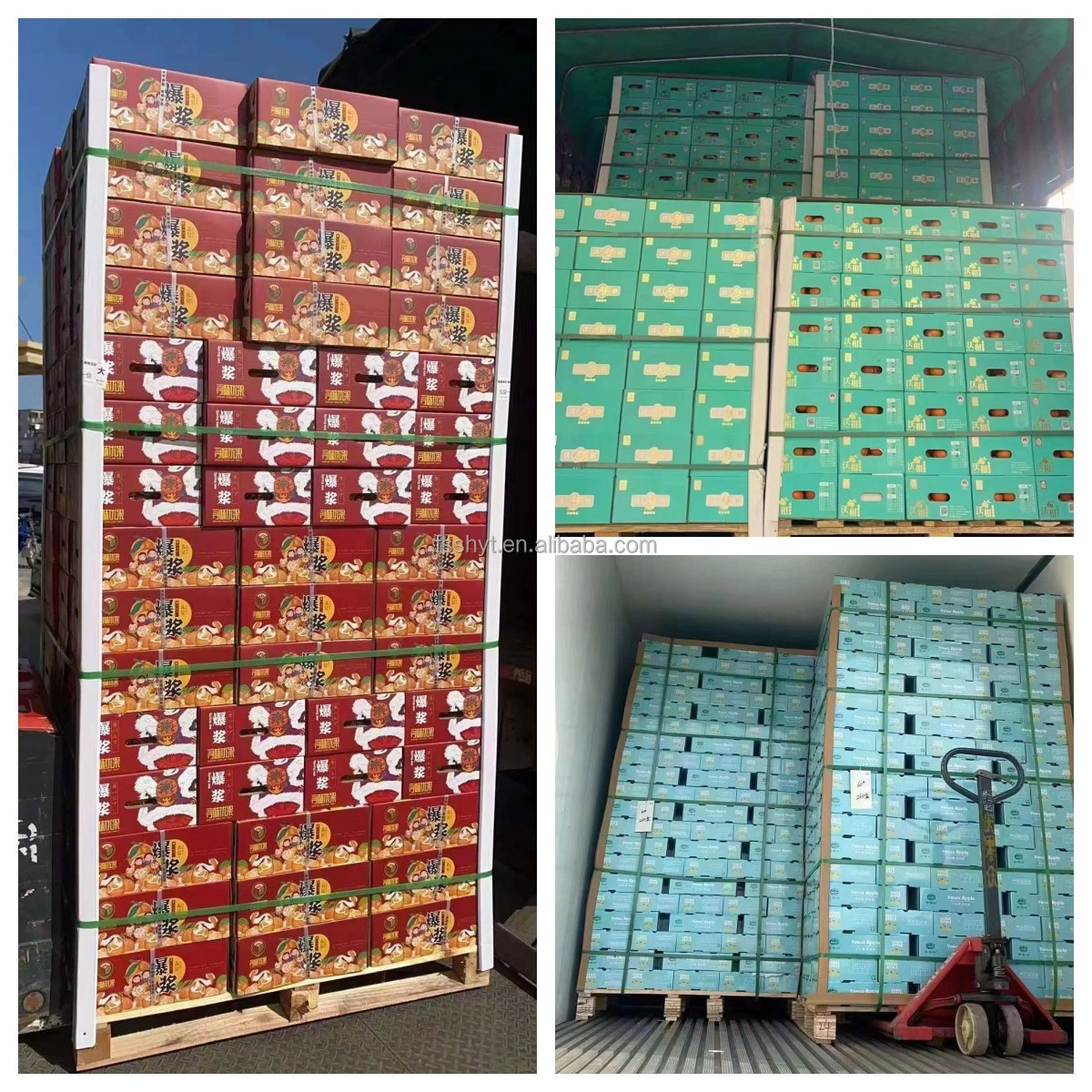
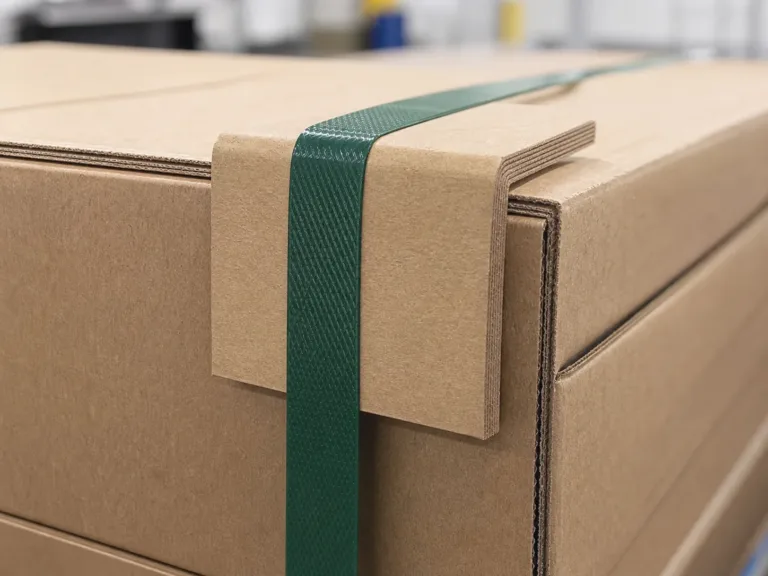
The second function is strap protection. When PET strap is tightened around a pallet, the pressure is concentrated along the strap line. Without protection, this pressure can cut into cartons, leave marks, or deform the package. A paper corner protector distributes the pressure over a wider surface and helps keep the packaging shape stable.
The third function is pallet stability. When placed vertically on the corners of a pallet, paper corner protectors can reinforce the load and help maintain straight stacking. This is especially useful for tall pallets, cartons stacked in multiple layers, and products shipped over long distances.
Paper corner protectors are suitable for many export packaging scenarios, including furniture panels, doors, boards, glass products, household appliances, cartons on pallets, building materials, and industrial components. For buyers who frequently receive damage claims related to corners, strap marks, or pallet deformation, paper corner protectors are often a simple but effective improvement.
Honeycomb Cardboard: Lightweight Surface and Compression Protection
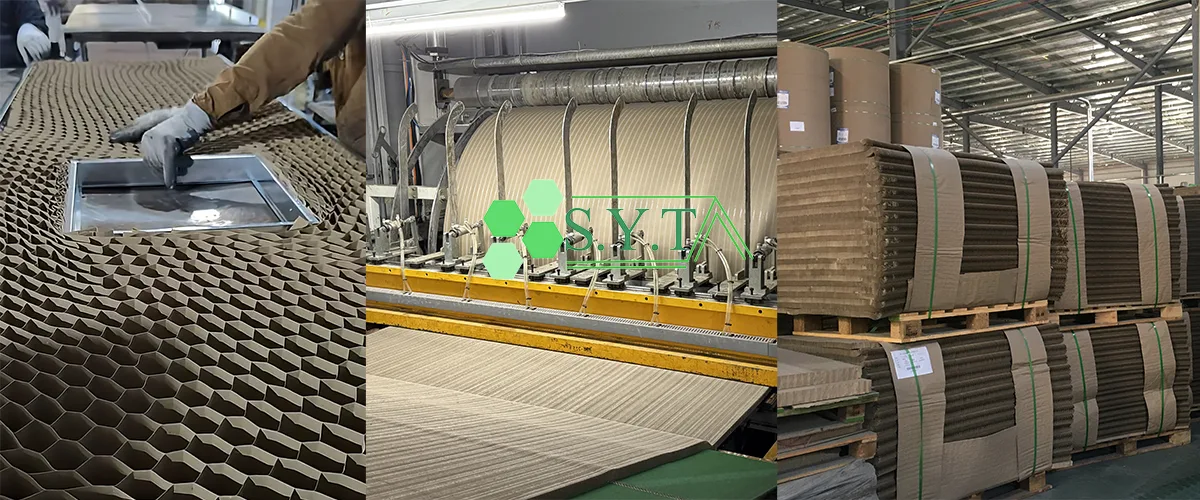
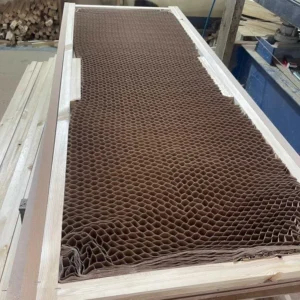
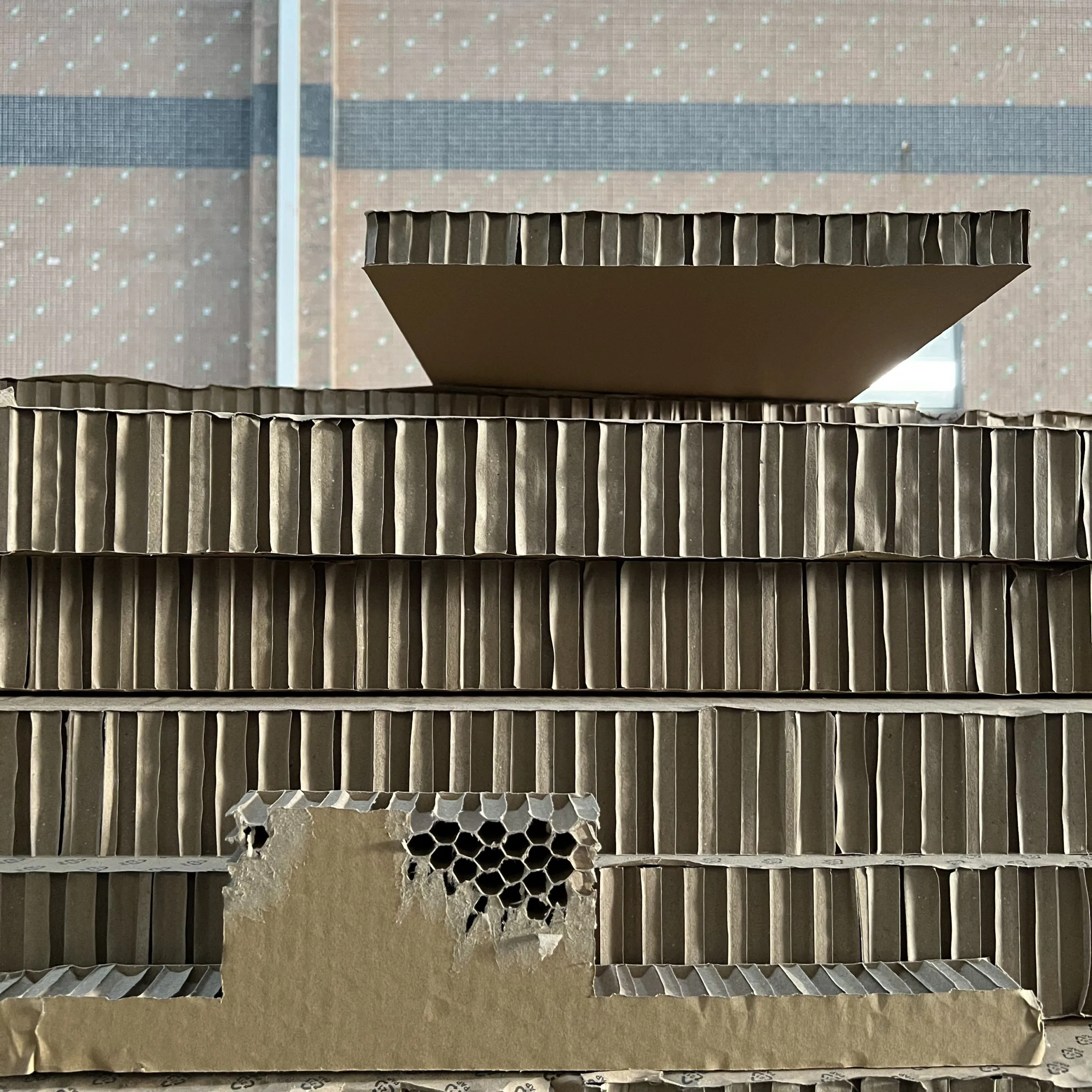
Honeycomb cardboard is a paper-based material with a honeycomb structure. This structure gives the board a good balance of light weight, rigidity, cushioning, and compression resistance. In export packaging, honeycomb cardboard can be used as a protective board, separator, liner, surface protection sheet, or inner cushioning material.
One major advantage of honeycomb cardboard is weight reduction. Compared with some wood-based or plastic-based materials, honeycomb cardboard can provide protection without adding too much shipping weight. For export shipments, lower packaging weight can help reduce transportation cost, especially for large-volume orders.
Another advantage is surface protection. Large products such as doors, furniture panels, glass, metal sheets, home appliances, and decorative boards are easily scratched or dented during transportation. Honeycomb cardboard can be placed between products or on outer surfaces to reduce direct contact and absorb impact.
Honeycomb cardboard can also be used as a separator or inner liner. For cartons containing multiple products, it helps divide the space and reduce friction. For pallet packaging, it can be used as a top board, bottom board, side protection board, or layer pad.
From a sustainability perspective, honeycomb cardboard is also attractive because it is paper-based and recyclable. As more buyers look for alternatives to foam, plastic, and wood packaging, honeycomb paper packaging has become a practical option for many export industries.
PET Strap: Keeping Pallet Loads Stable During Long-Distance Shipping
PET strap is used to secure pallet loads and prevent movement during transportation. It is especially valuable for heavy goods, export cargo, tall pallets, and products that may shift during truck, sea, or warehouse handling.
A good PET strap system keeps cartons or products tightly grouped together. This reduces the risk of pallets leaning, products falling, or cartons moving inside the container. Compared with using only stretch film, PET strap provides stronger mechanical holding force.
However, PET strap should not be used alone in every situation. When the strap is tightened directly against carton corners or product edges, it may cause deformation or visible damage. This is why PET strap often works best when combined with paper corner protectors. The corner protector spreads the pressure, while the strap provides load stability.
For heavy industrial parts, building materials, machinery components, furniture boards, doors, and palletized cartons, PET strap is often an important part of a complete protective packaging system.
How to Match Packaging Materials by Product Type
Different products have different risks. The right export pallet packaging should be selected based on product shape, weight, fragility, surface sensitivity, and shipping distance.
| Product Type | Main Packaging Risk | Recommended Packaging Solution |
|---|---|---|
| Furniture panels | Surface scratches, edge damage, bending | Honeycomb cardboard as surface protection, paper corner protector for edges, PET strap for pallet stability |
| Glass products | Impact, vibration, corner breakage | Honeycomb cardboard separators, edge protectors, custom inner packaging, careful pallet stabilization |
| Home appliances | Surface dents, carton compression, movement during shipping | Honeycomb cardboard liners, paper corner protectors, PET strap with edge protection |
| Cartons on pallets | Carton collapse, leaning pallet, strap marks | Vertical paper corner protectors, PET strap, top and bottom honeycomb cardboard sheets |
| Doors and boards | Edge chipping, surface scratches, deformation | Honeycomb cardboard sheets, long paper corner protectors, custom side protection |
| Heavy industrial parts | Load movement, concentrated pressure, carton failure | Heavy-duty pallet design, PET strap, paper corner protectors, custom protective packaging |
| Fragile exported goods | Shock, vibration, inner movement | Honeycomb cardboard cushioning, void filling, separators, custom inner structure |
This table shows why a single packaging material is rarely enough. Most export shipments need a combination of edge protection, surface protection, load holding, and customized cushioning.
How to Reduce Packaging Cost Without Reducing Protection
Many buyers try to reduce packaging cost by choosing thinner materials or cheaper suppliers. However, the lowest material price does not always create the lowest total cost. In export shipping, the total cost includes packaging materials, labor, shipping weight, container space, product damage, customer complaints, returns, and replacement shipments.
Do Not Simply Use Thicker Materials
Thicker materials may increase cost and shipping weight without solving the real problem. If pallet instability is the issue, thicker cartons may not help. If strap pressure is causing damage, the better solution may be paper corner protectors rather than stronger cartons.
Match the Structure to the Risk
A good packaging system should solve the specific risk. Edge damage requires edge protection. Surface scratches require surface protection. Pallet shifting requires load stabilization. Internal movement requires void filling. Matching material to risk is more efficient than over-packaging.
Use Honeycomb Cardboard to Reduce Weight
Honeycomb cardboard can provide protection while keeping packaging relatively lightweight. For large surface areas, it may reduce the need for heavier boards or less sustainable materials.
Use Paper Corner Protectors to Reduce Damage Claims
Paper corner protectors are often low-cost compared with the potential cost of damaged goods. They help reduce corner damage, strap marks, carton deformation, and pallet instability.
Use PET Strap to Reduce Cargo Movement
A stable pallet reduces the risk of falling, leaning, and shifting during transportation. PET strap helps maintain load integrity, especially during long-distance shipping.
Customize Packaging Dimensions
Custom protective packaging can reduce unnecessary material use. When boards, liners, separators, or corner protectors are cut to the correct size, the packaging is cleaner, stronger, and more cost-efficient.
Consider Total Packaging Cost
The best packaging decision is not always the cheapest material. It is the solution that reduces total export risk at a reasonable cost. For B2B buyers, fewer claims, fewer damaged goods, better customer satisfaction, and stable repeat shipments are often more important than saving a small amount on packaging materials.
RFQ Checklist: What Buyers Should Send to a Packaging Supplier
To get an accurate packaging recommendation, buyers should provide clear technical and shipping information. A good RFQ helps the supplier suggest the right materials, sizes, thicknesses, and packaging structure.
Before contacting an industrial packaging supplier, prepare the following information:
- Product size
- Product weight
- Product shape and surface sensitivity
- Pallet size
- Number of units per pallet
- Stack height
- Shipping method, such as sea freight, truck, or air freight
- Destination country
- Storage environment
- Quantity per order
- Current packaging photos
- Photos of current damage problems
- Required packaging strength
- Whether the product is fragile, heavy, sharp-edged, or moisture-sensitive
- Loading method and container type
- Sustainability or recyclable packaging requirements
The more complete the information, the easier it is to design a practical custom protective packaging system. For example, a packaging supplier may recommend paper corner protectors for strap protection, honeycomb cardboard for surface protection, PET strap for load stability, and customized inner packaging for fragile products.
Common Mistakes to Avoid
Only Using Stretch Film
Stretch film is useful for wrapping and light stabilization, but it does not provide strong edge protection or compression protection. For export pallet packaging, stretch film alone is often not enough.
Using PET Strap Without Edge Protectors
PET strap can damage cartons or products if applied directly to edges. Paper corner protectors should be used when strap pressure may cause deformation or marks.
Choosing Packaging Based Only on Price
Low-cost packaging may lead to higher damage rates, more complaints, and extra replacement costs. Buyers should evaluate total cost, not just unit material price.
Ignoring Pallet Load Stability
A product may be well protected inside the carton, but if the pallet shifts or collapses, the shipment can still be damaged. Pallet load protection should be part of the packaging design.
Using Non-Customized Packaging for Irregular Products
Irregular products need custom protective packaging. Standard boards, cartons, or fillers may leave empty spaces or pressure points, increasing the risk of damage.
Not Testing Packaging Before Bulk Shipment
For high-value or fragile goods, packaging should be tested before large-volume export. Trial shipments, drop tests, compression checks, or customer feedback can help improve the system before scaling.
Conclusion
Choosing the right protective packaging system for export pallet shipping is not about selecting one material. It is about building a balanced system that protects edges, surfaces, pallet stability, and internal structure.
Paper corner protector helps protect edges and reduce strap damage. Honeycomb cardboard provides lightweight surface protection, cushioning, and compression resistance. PET strap keeps pallet loads stable during long-distance shipping. Custom protective packaging ensures the system matches the product size, weight, shipping method, and destination requirements.
For overseas B2B buyers, packaging engineers, and logistics teams, the goal is clear: reduce shipping damage, improve pallet stability, lower total packaging cost, and deliver products safely to customers.
SYTPACK provides paper corner protector, honeycomb cardboard, PET strap, honeycomb paper core, and custom protective packaging solutions for export packaging and cargo protection. For buyers facing repeated pallet damage, unstable loads, or high packaging waste, a complete system-based approach can be more effective than simply changing one material.
FAQ
1. What is the best packaging for export pallet shipping?
The best packaging depends on the product type, weight, pallet size, shipping method, and damage risk. In many cases, a combination of paper corner protector, honeycomb cardboard, PET strap, and custom protective packaging provides better results than using one material alone.
2. When should I use paper corner protectors?
You should use paper corner protectors when products or cartons are easily damaged at the edges, when PET strap may cut into packaging, or when pallet stability needs improvement. They are commonly used for furniture, doors, boards, glass, home appliances, and palletized cartons.
3. Is honeycomb cardboard strong enough for industrial packaging?
Honeycomb cardboard can be strong enough for many industrial packaging applications when the correct thickness, structure, and paper quality are selected. It is often used as a protective board, separator, liner, layer pad, and surface protection material.
4. Can PET strap damage cartons?
Yes. PET strap can damage cartons if it is tightened directly against carton edges without protection. Using paper corner protectors helps distribute the pressure and reduce strap marks, cuts, and carton deformation.
5. How can I reduce pallet shipping damage?
To reduce pallet shipping damage, identify the main risk first. Use paper corner protectors for edge damage, honeycomb cardboard for surface and compression protection, PET strap for load stability, and custom packaging for irregular or fragile products. Also provide complete product and shipping details to your packaging supplier before ordering.