Introduction
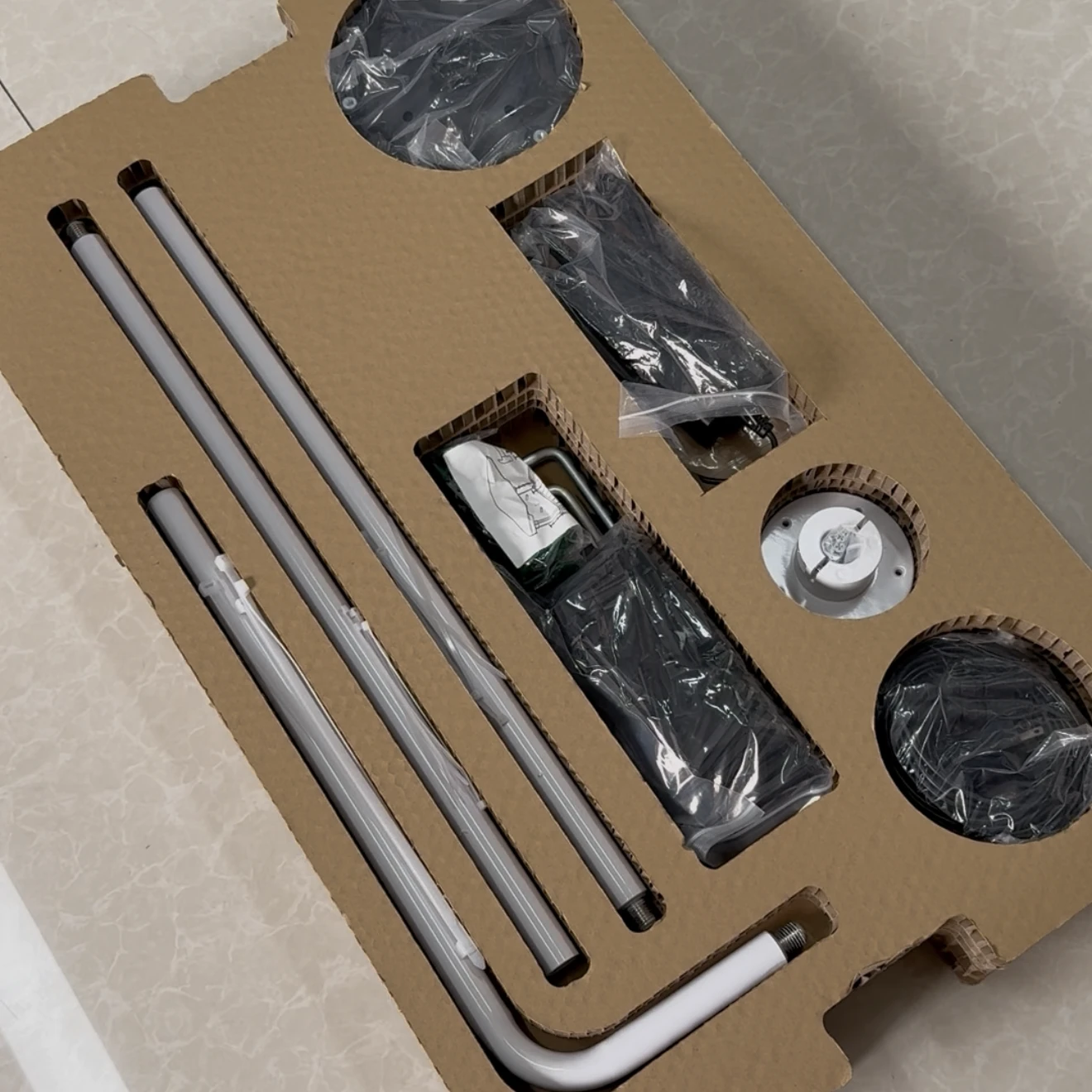
When standard packaging cannot accommodate a product’s unique geometry, custom honeycomb packaging becomes the practical solution. Unlike generic foam or corrugated inserts, custom honeycomb packaging are engineered to match the exact contour of each component, providing precision protection with fully recyclable material. However, for first-time buyers, the process of starting a custom project can seem unclear. Understanding the three standard collaboration routes—and which one delivers the best fit—is an essential first step toward a successful packaging investment.
What Are the Three Standard Routes for Custom Honeycomb Packaging Design?
In the custom packaging industry, manufacturers typically offer three collaboration models. The first is selection-based: the customer chooses from an existing product catalog and adjusts standard sizes. The second is drawing-based (CAD): the customer provides a technical drawing or 2D/3D file, and the factory engineers the honeycomb insert around those exact dimensions. The third is sample-based: the customer ships a physical product sample to the factory, where engineers perform on-site measurement and design the protective structure directly around the real item. Each route has its strengths, but they lead to very different levels of precision.
How Does the Drawing-Based Route Work for Custom Honeycomb Packaging Inserts?
For customers with complete engineering documentation, the drawing-based route is efficient. The factory uses the provided dimensions to design the die-cut pattern, including the hollows that will cradle each component. This route works well when the drawings are accurate and up to date. However, drawings may not always reflect subtle production tolerances, surface irregularities, or final assembly variations. If the actual product differs from the drawing by even a small margin, the hollow may fit loosely, allowing movement that can lead to friction damage during transit—especially in the 85%-95% relative humidity environment of a maritime container [1].
Why Is the Physical Sample Route the Preferred Choice for Precision Fit?
Sending a physical sample allows engineers to measure the product with precision instruments, capturing every contour, protrusion, and tolerance deviation that a drawing might miss. This hands-on approach enables the design of hollows that lock each component into a fixed position with an optimal fit. Research into cushioning mechanics indicates that a precisely fitted honeycomb structure can absorb between 30% and 50% of kinetic energy during a localized impact [2]. When the hollow matches the product exactly, the energy-absorbing hexagonal core works at its full potential, significantly reducing the risk of impact damage.
What Information Should You Prepare Before Contacting a Custom Packaging Factory?
To accelerate the quotation process, buyers should prepare three items. First, the product’s physical sample or detailed drawings, including dimensions and weight. Second, the transit environment: ocean freight, air freight, or a combination, since this determines the required moisture control—a core moisture level of 8% to 10% is standard for export-grade paperboard, as higher moisture can reduce structural rigidity by approximately 50% [3][4]. Third, the expected order volume and target timeline, which helps the factory recommend the appropriate board thickness and cell size while controlling tooling costs. To understand how precision hollows lock your components in place, see our [technical guide on die-cut honeycomb papercardboard].
How Long Does a Typical Custom Honeycomb Sample Cycle Take?
For a factory with in-house die-cutting capability, the sample cycle is typically 3 to 5 days from design confirmation. This includes creating the cutting pattern, producing the sample inserts, and verifying the fit against the actual product. By choosing a manufacturer with integrated production, buyers can significantly shorten the time from concept to validated prototype, allowing design iterations to be completed before committing to bulk production.
Customization Route Comparison Matrix
Conclusion
Choosing the right route for custom honeycomb packaging depends on the complexity of your product and the accuracy of your documentation. While the drawing-based route is efficient for well-documented items, the sample-based route delivers the highest level of precision by designing directly around the real product. At our facility, we support all three routes with in-house design and die-cutting, ensuring that your components are protected by a custom-fit, fully recyclable honeycomb solution.
References: [1] Absortech Group (2023). [2] Research on Shock Absorption Characteristics of Paper Honeycomb. (2022). [3] Kellicutt, K. Q., & Landt, E. F. (1951). [4] IEOM Society (2023).