A door panel can leave the press looking acceptable and later develop soft spots, visible lines or a hollow sound. Honeycomb core strips are often blamed first, but the result usually depends on the complete system: cell size, spacing, glue, moisture and pressing conditions.
What causes honeycomb core strips to sink inside a door panel?
Sinking usually means that part of the door skin is not receiving uniform support. Possible causes include a mismatched core specification, excessive gaps, uneven strip height or incomplete bonding. Start with the complete construction: door size, skin material and thickness, core height, strip width and spacing, with separate attention to lock, hinge and handle areas.
Can the wrong cell size reduce local support?
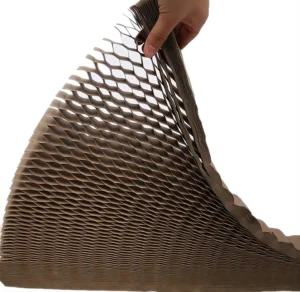
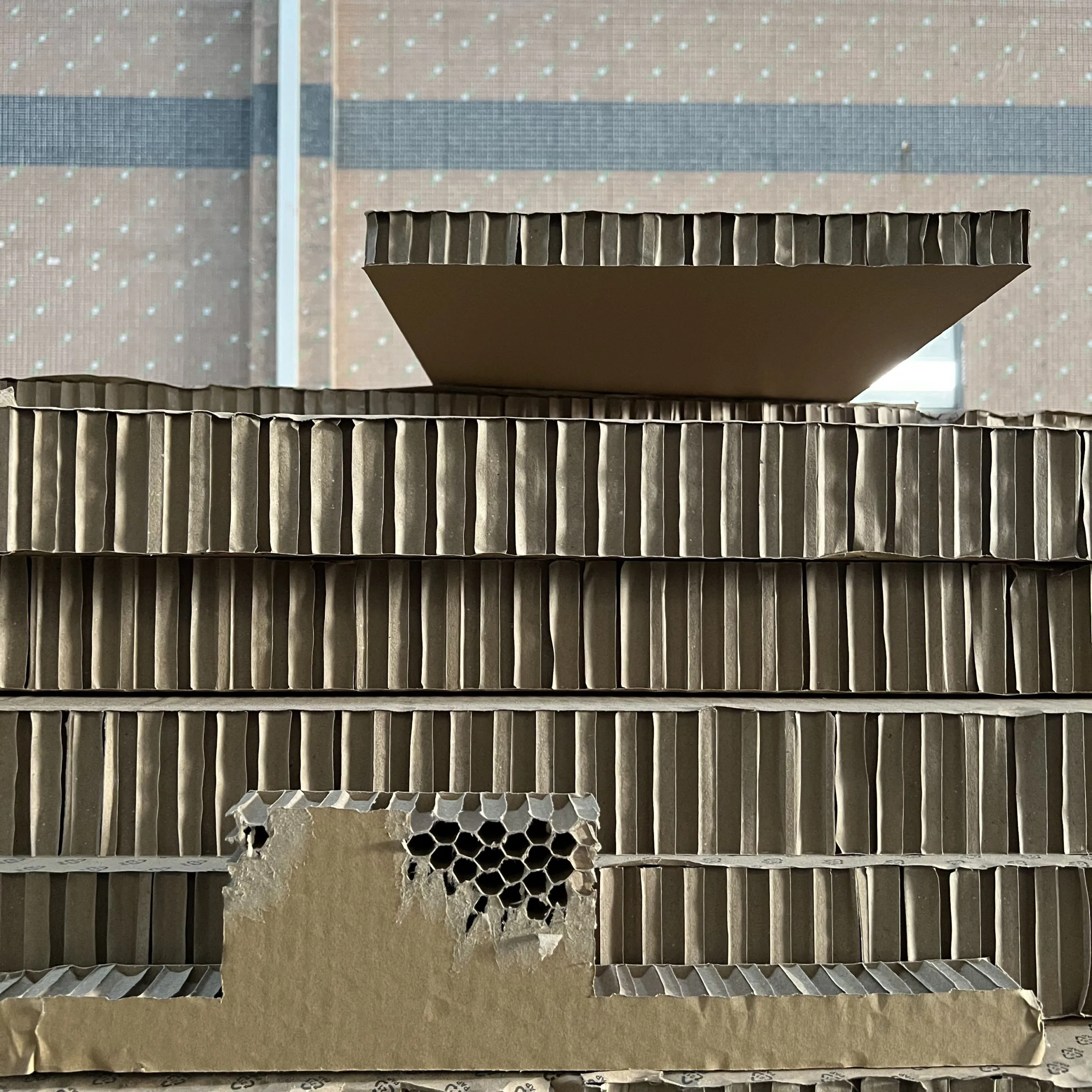
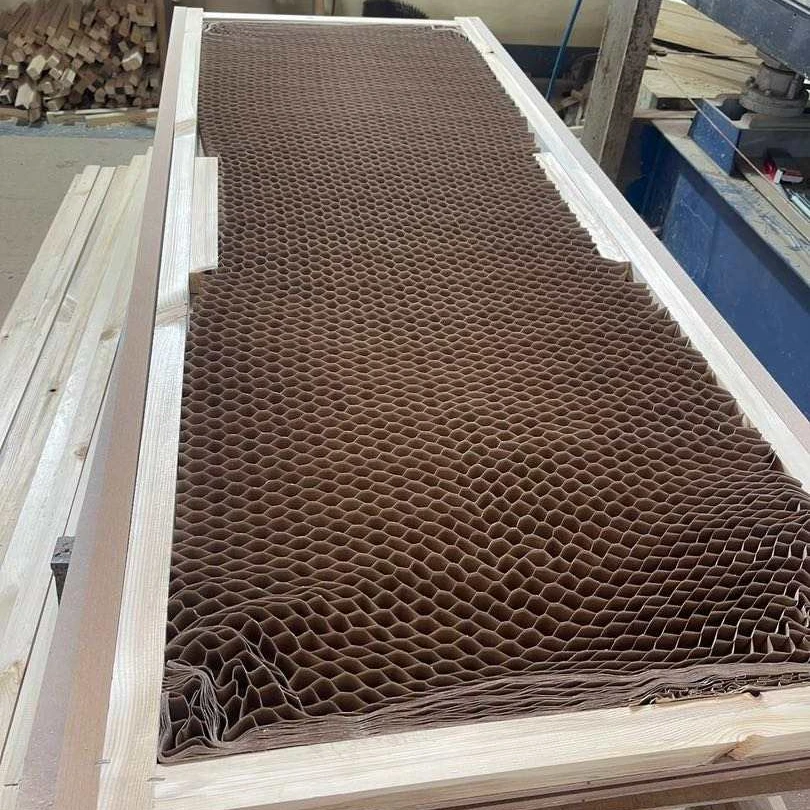
Cell size affects the number and distribution of paper walls in a given area. A smaller cell can provide a denser support pattern, while a larger cell may suit panels whose skin and pressing process already provide sufficient rigidity. Neither option is automatically correct for every door.
The choice should match panel dimensions, skin material, target weight and production method. Keep paper grammage and cell size consistent when comparing samples. For a custom order, provide the door dimensions and skin structure so the factory can recommend the specification for sample verification.
How do gaps between strips create hollow areas?
A honeycomb core does not need to fill every millimetre, but spacing must be controlled. If the gap is too large, the skin may flex between support lines. This can appear as a hollow sound during tapping or a shallow depression under light pressure.
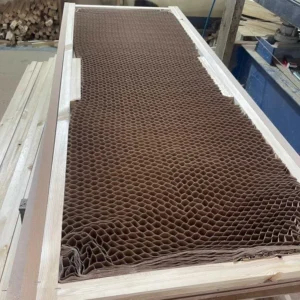
The centre of a large door may need a different arrangement from the perimeter. Edges can require more continuous support, while the main field needs a regular pattern that avoids wide unsupported zones. Compare the placement with the approved drawing before closing the panel.
Why can uneven glue lines lead to local instability?
The glue line connects the core to the door skin. Discontinuous coverage means the strip may contact the skin in some places but transfer load inconsistently along its length. Too little adhesive can create loose contact; too much can extend drying time and add moisture to the process.
For export-grade door core, we use water-based PVA adhesive. Glue amount, application, drying and pressing conditions still need to work together, so customers should validate them on the actual skin material.
How do moisture and pressing conditions affect panel stability?
Paper-based core is hygroscopic. If moisture varies between batches or the core is stored in a humid workshop, stiffness and bonding behaviour may change. Our export batches generally target 8%–10% moisture, checked before shipment and recorded in the batch QC information. This is a production target, not a substitute for testing the finished door in its own climate and process.
Protect the core from direct humidity, use it within the agreed production window and confirm the pressing conditions. Material and process problems can create similar symptoms, so both should be checked before changing the specification.
Door panel troubleshooting checklist
Conclusion
A sinking or hollow door panel is rarely solved by increasing thickness alone. Review the complete system: core geometry, strip spacing, hardware zones, glue lines, moisture and pressing conditions. At our factory, we supply custom honeycomb core strips in single-cut and continuous formats, use water-based PVA adhesive and generally target 8%–10% moisture for export batches. Samples and QC information can be confirmed before bulk production.
For the next step, see our guide on how to arrange honeycomb core strips inside a door panel.
Send us your door size, skin material, core height, monthly volume and pressing process. We can review the specification and prepare a sample plan.
Technical note: final panel performance depends on the complete door construction and the customer’s pressing process. Sample validation is recommended before bulk production.