In the world of heavy industrial logistics, the greatest threat to valuable cargo is not just sudden impact, but the constant, crushing weight of vertical stacking. Whether you are shipping solar panels or heavy automotive engines, the packaging must act as a structural shield. Heavy duty honeycomb cardboard achieves this through a specific mechanical phenomenon known as the “Pillar Effect.” By understanding how these hexagonal cells distribute force, engineers can replace heavy wooden crates with a lighter, fully recyclable solution without compromising safety.
What exactly is the “Pillar Effect” in Heavy Duty Honeycomb Cardboard?
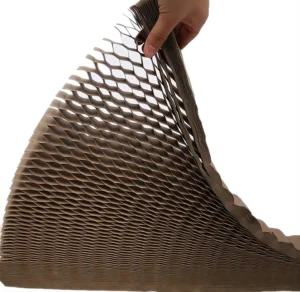
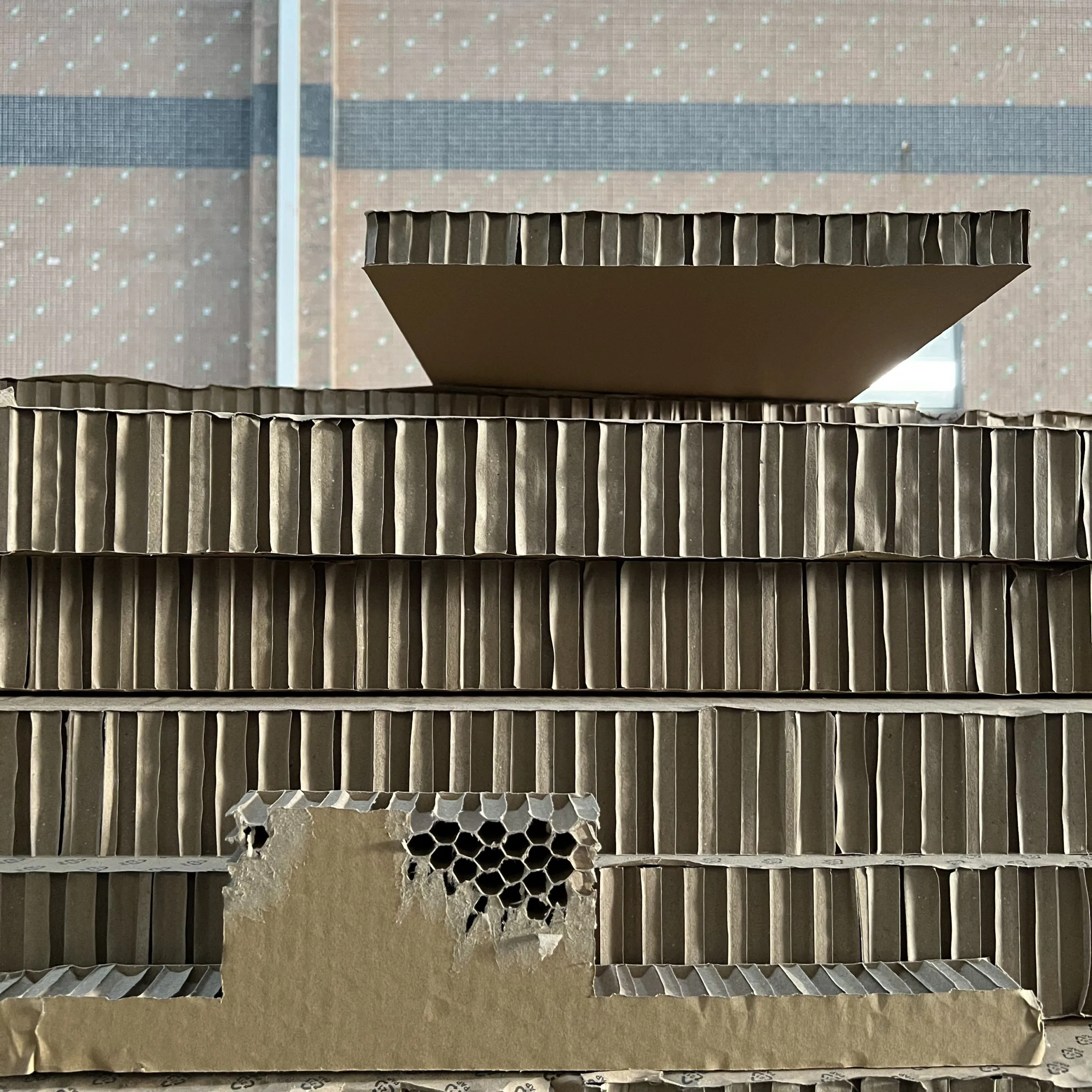
The “Pillar Effect” refers to the way a honeycomb structure mimics thousands of individual support columns. When force is applied to the surface of the board, each hexagonal cell wall stands vertically, acting like a micro-pillar. Unlike corrugated fiberboard, which has flutes that can lean or collapse under asymmetrical pressure, the honeycomb core provides uniform resistance across the entire surface. Engineering studies indicate that a well-constructed honeycomb core can redistribute between 45% and 60% of top-load pressure [1], ensuring that the stress does not concentrate on a single point of the enclosed product.
How much top-load pressure can the hexagonal core redistribute?
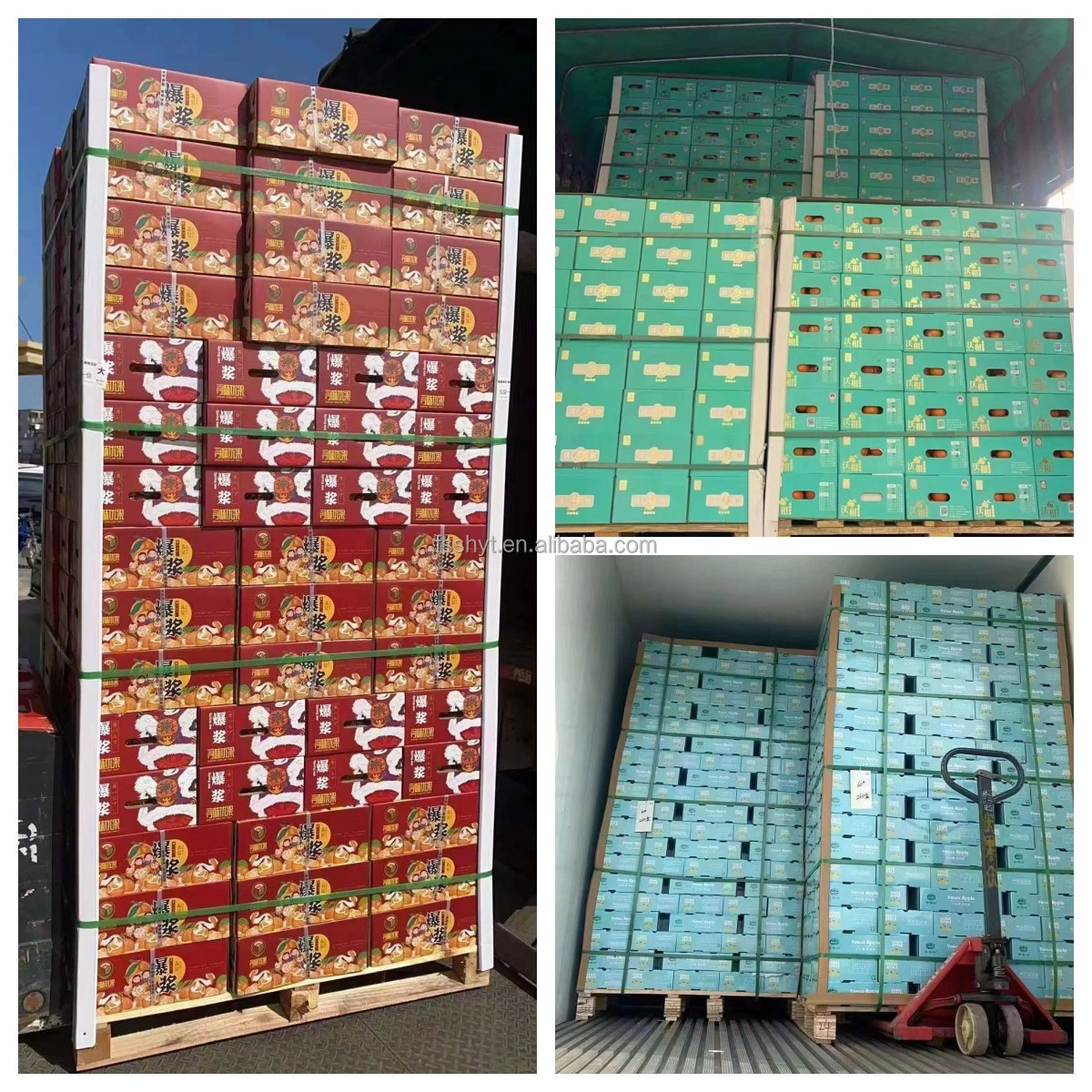
In a standard maritime container, pallets are often stacked two or three layers high. For the bottom pallet, this means enduring hundreds of kilograms of constant pressure for weeks. Heavy duty honeycomb cardboard excels here because its vertical cells prevent “creep”—the slow deformation of material under stress. By increasing the grammage of the kraft paper used for the core, we can calibrate the board to handle specific load requirements. In a controlled compression test, high-density honeycomb structures have demonstrated the ability to withstand several tons of vertical force before the “pillars” reach their elastic limit.
Why does cell density determine the ultimate compression limit?
Not all honeycomb boards are created equal. The strength of the “Pillar Effect” is directly tied to cell density—the size of the hexagonal openings. A smaller cell size (e.g., 6mm to 10mm) creates more cell walls per square inch, effectively increasing the number of “pillars” supporting the load. For heavy automotive parts or industrial machinery, we recommend smaller cell sizes combined with high-GSM (Grams per Square Meter) kraft liners. This combination ensures that the Flat Crush Strength (FCT) remains high enough to prevent the board from thinning under long-term stacking.
Can heavy duty honeycomb eliminate micro-cracks in solar panels?
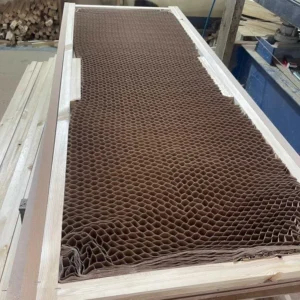
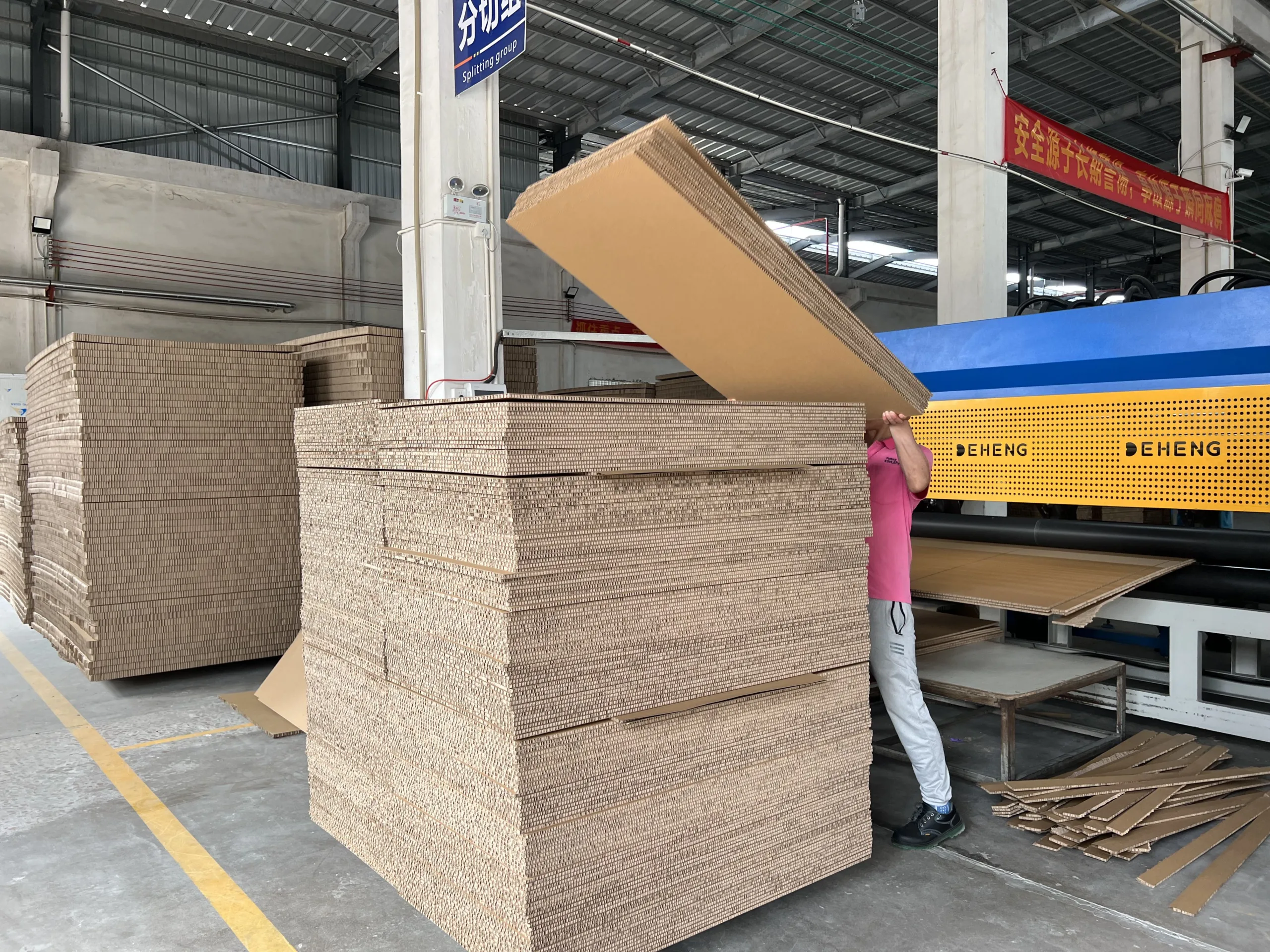
One of the most critical applications for heavy duty honeycomb cardboard is in the solar energy sector. Solar panels are highly sensitive to vertical pressure, which can cause “micro-cracks”—invisible fractures that reduce energy efficiency. By using custom-engineered honeycomb inserts with a high Pillar Effect, manufacturers can ensure that the weight of the upper pallets is carried entirely by the packaging walls, not the glass or frames of the panels. This structural bypass is the primary reason why leading solar manufacturers are moving away from traditional foam and towards engineered honeycomb solutions.
Why is 8-10% moisture the prerequisite for maximum stacking strength?
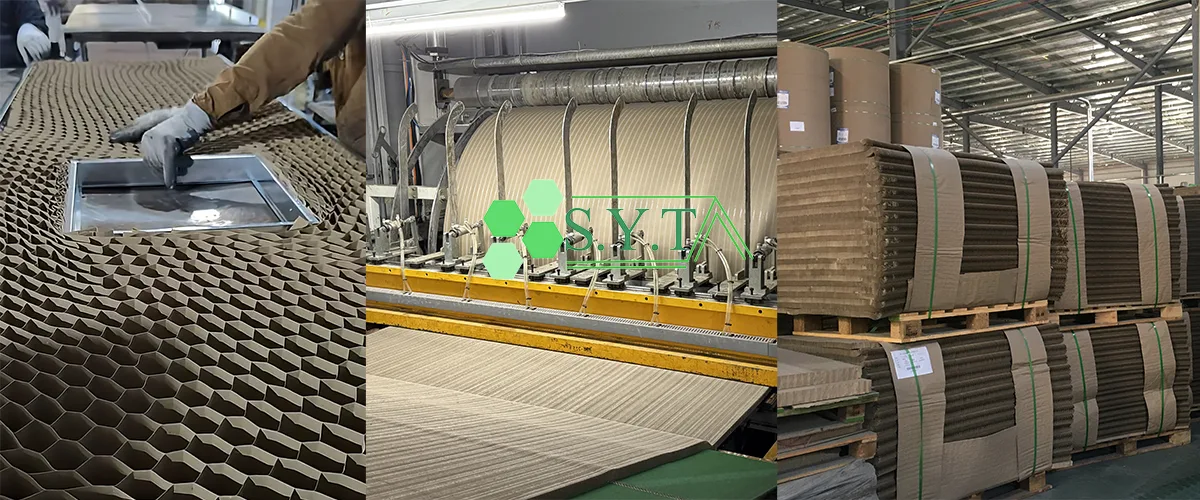
Even the best-engineered “pillars” will fail if the material becomes soft. Paper is hygroscopic, and in a high-humidity sea container (85%-95% RH), paper fibers lose their rigidity. Research shows that when paperboard moisture increases from 8% to 16%, its structural strength can drop by as much as 50% [2]. This is why our heavy duty honeycomb cardboard undergoes a double-drying process to lock the moisture at 8%-10%. Without this precise moisture control, the “Pillar Effect” is compromised, leading to stack collapse during long-distance export.
Conclusion
Heavy duty honeycomb cardboard is more than just a buffer; it is a structural engineering tool. By leveraging the Pillar Effect, optimizing cell density, and maintaining strict moisture control, it provides a stacking strength that rivals traditional materials while being 100% recyclable. Understanding these mechanics is the first step in optimizing your logistics chain. To see how these principles are applied in real-world industrial scenarios—such as solar and automotive shipping—explore our [guide on industrial honeycomb applications].
References: [1] Soroka, W. (2009). Fundamentals of Packaging Technology. [2] Kellicutt, K. Q., & Landt, E. F. (1951). Development of Design Data for Corrugated Fiberboard Shipping Containers.