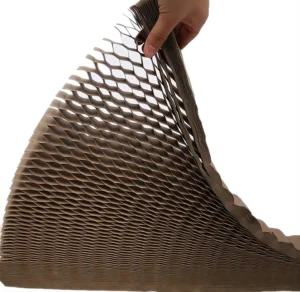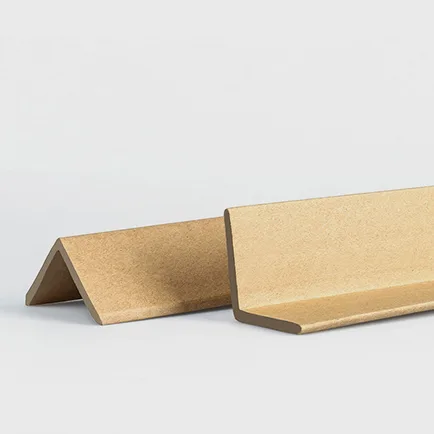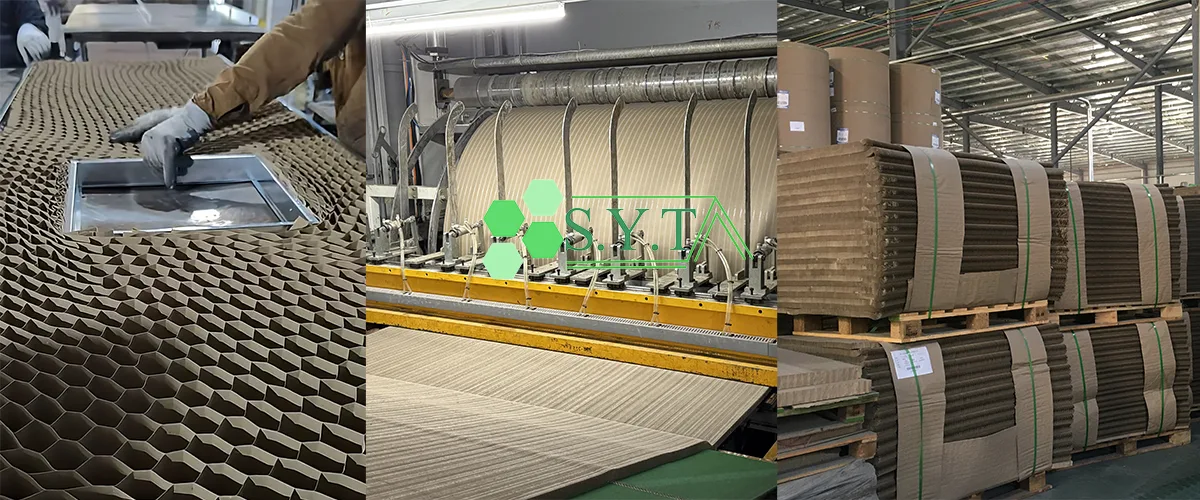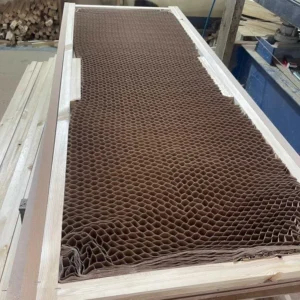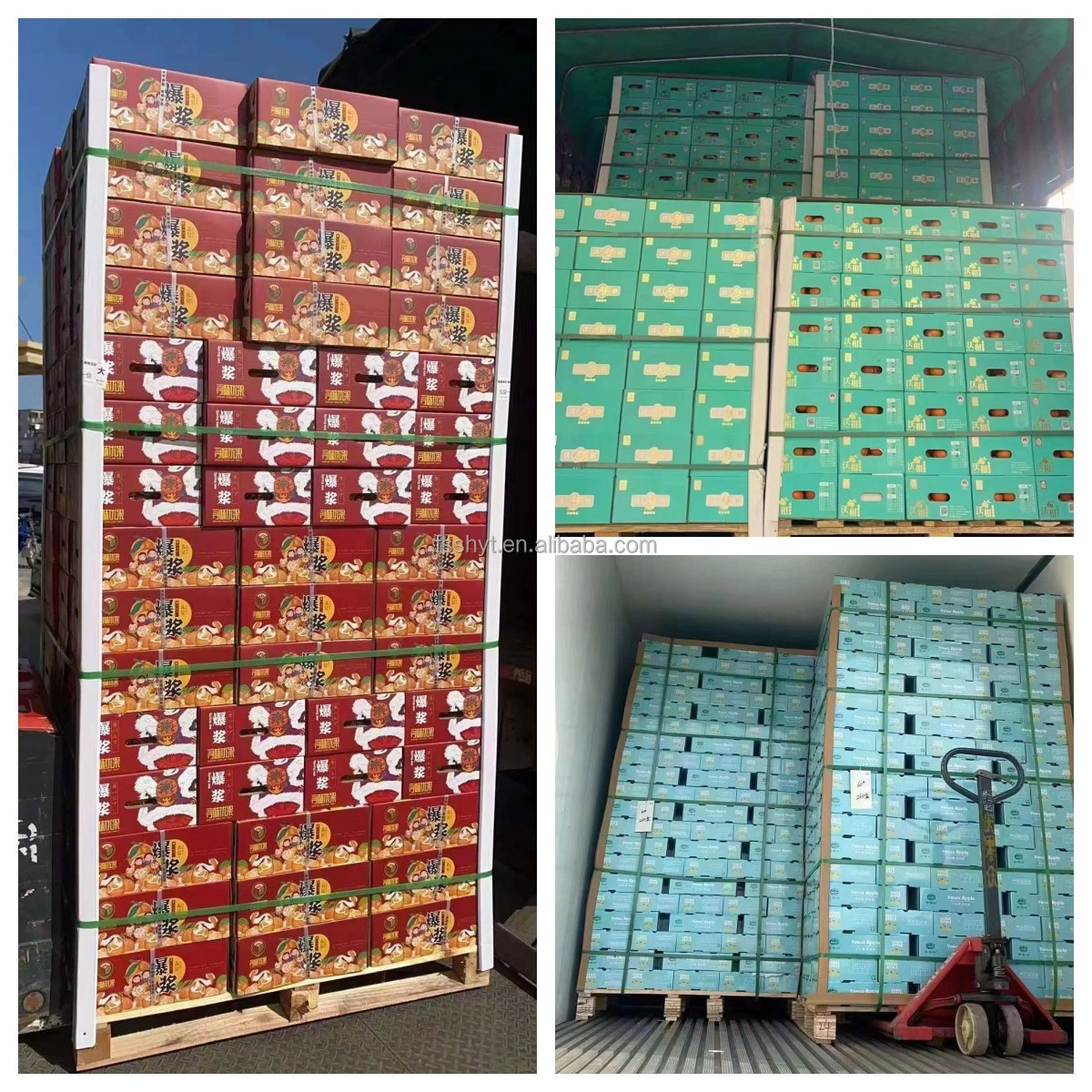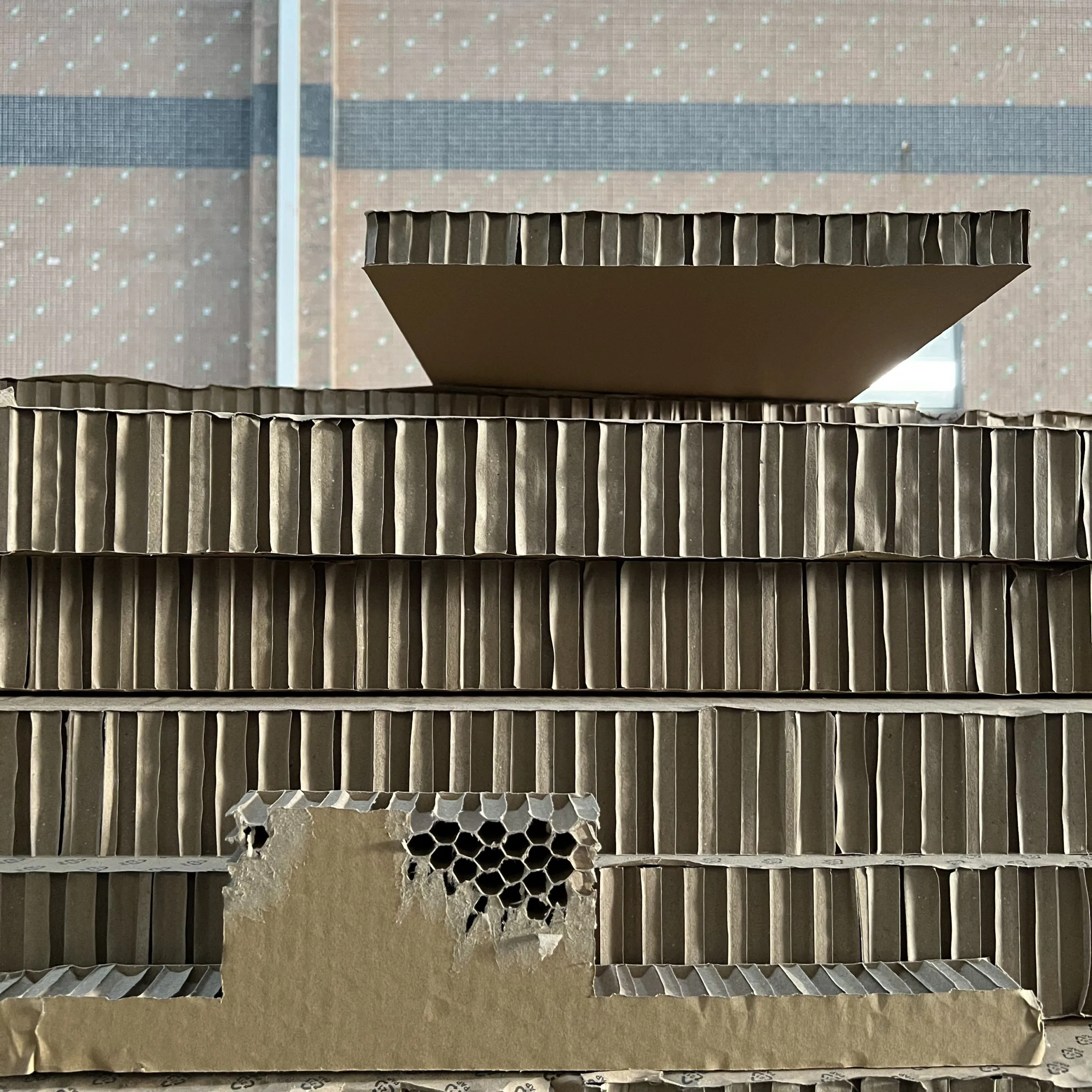
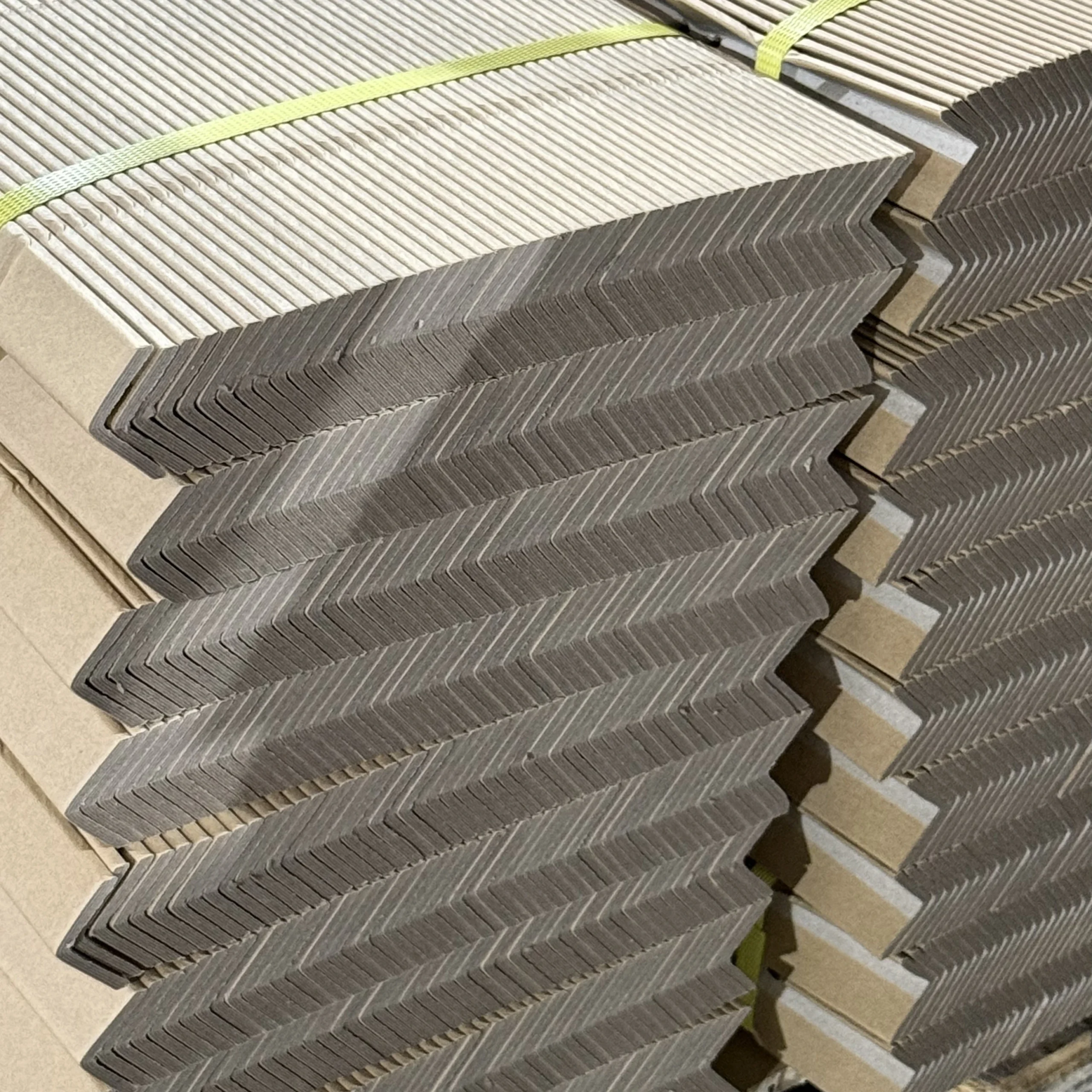
If you are importing “cardboard angle” protection for your cartons or pallet loads, the size you need is probably not on any standard shelf—it is cut for your product, your stacking height and your route to Australia. This page shows the factory floor behind that promise: the line where the boards are laminated, the drying process that keeps them rigid at sea, and the checks each batch passes before loading. What you see below is how we actually work, not a sales brochure.
What does a cardboard angle factory look like from the inside?
A cardboard angle starts as rolls of kraft paper. On our lamination line, the paper is built up in layers and pressed into a rigid 90-degree profile. You choose the paper finish—natural kraft, white surface, or printed—and the layers are set for your order’s weight. Because every order is cut to your dimensions rather than picked from stock sizes, the quality you receive is measured against your drawing, not against a “standard” we happened to produce.
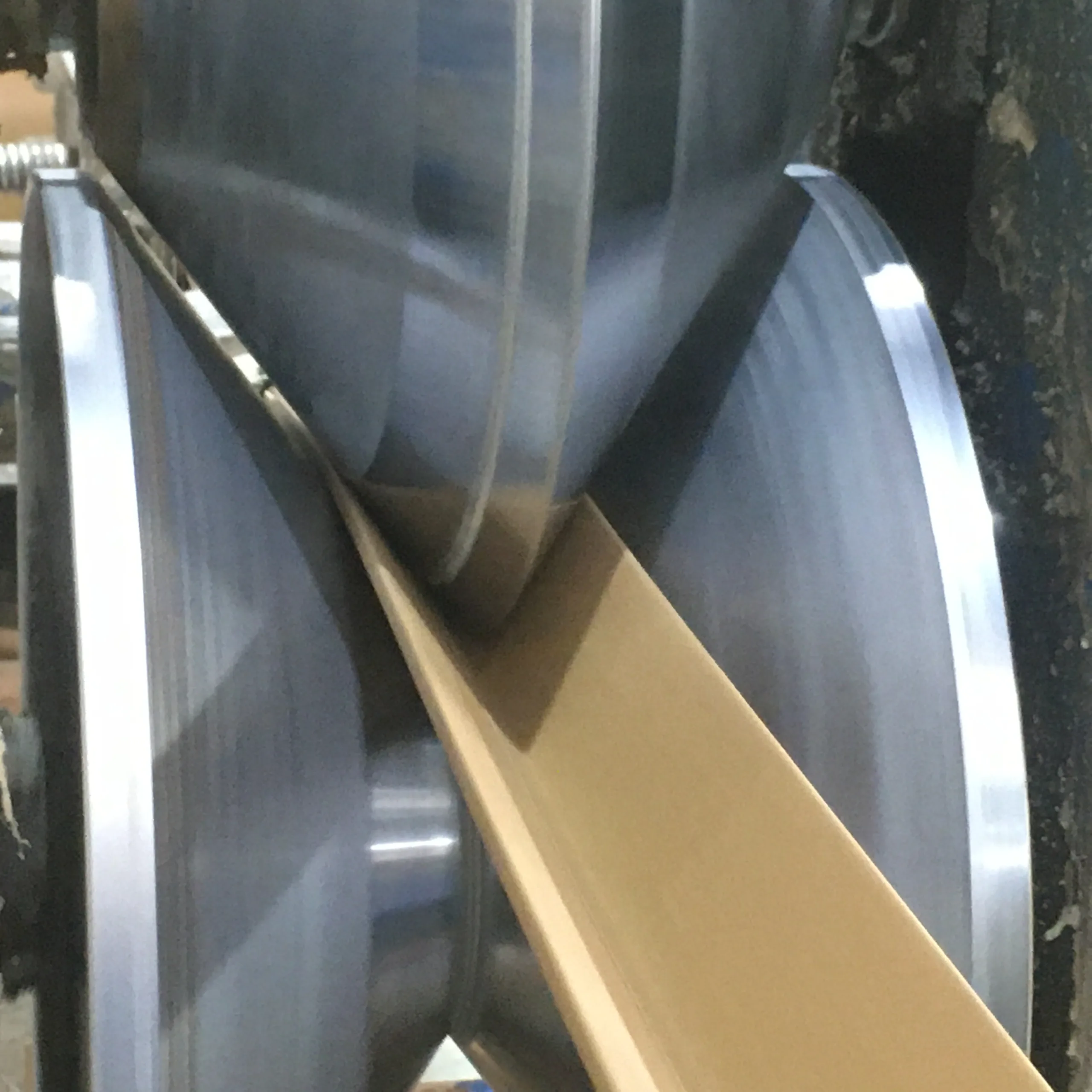
How is a custom cardboard angle produced from your RFQ?
The process usually starts with a message: carton size, product weight and how high you stack. From those three numbers we recommend a leg width and thickness, then confirm by sample. Once approved, production runs to your exact length and profile, and the finished boards are packed for sea freight to Sydney, Melbourne, Brisbane or Fremantle. If you already have a physical sample or a drawing, we can match it directly.
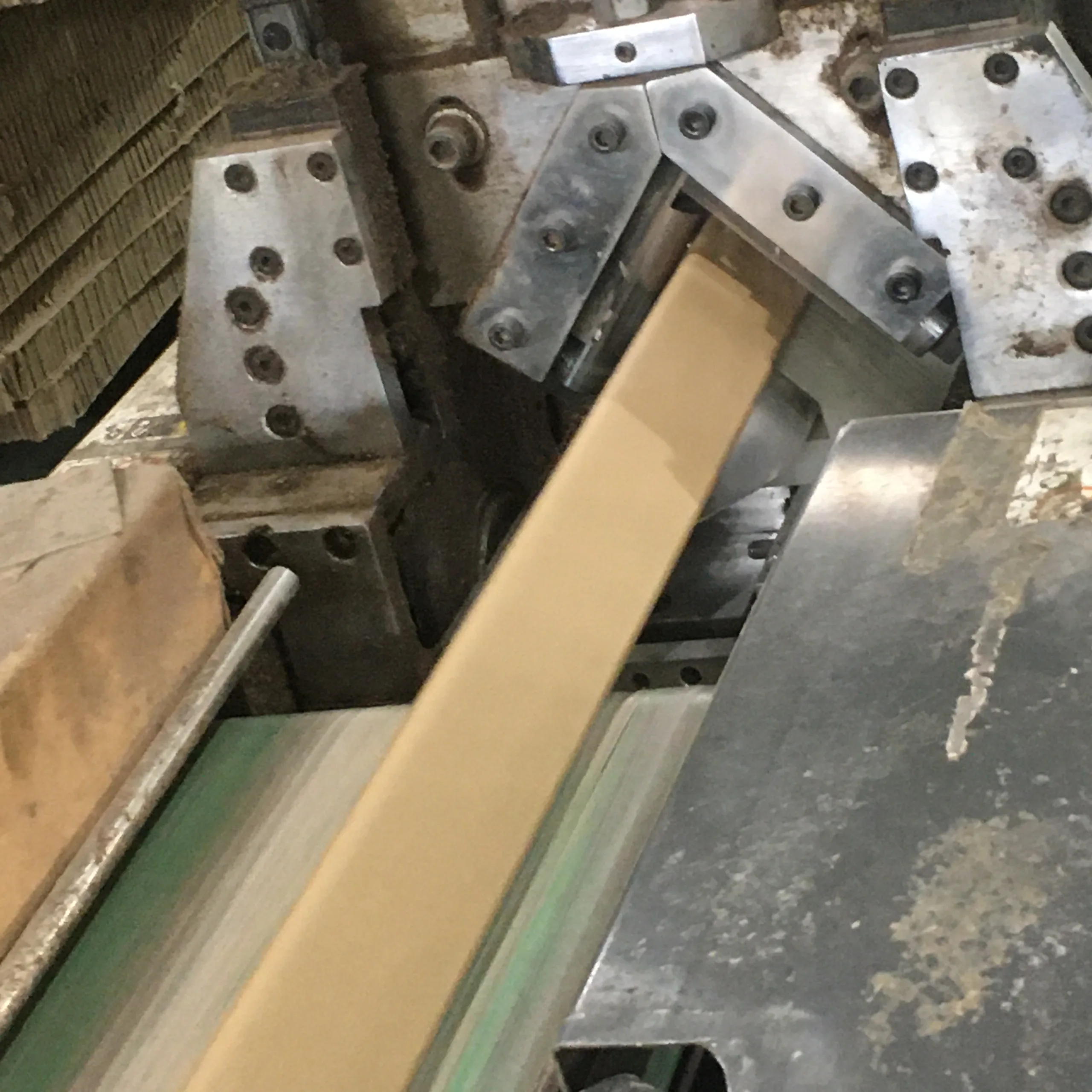
Why do we dry cardboard angles twice before shipment?
Paper is hygroscopic—it absorbs moisture from the air, and a sea container in the Australian summer creates exactly the humid conditions that soften unprotected board. Our drying process has two passes: the first after lamination, the second before cutting and packing. The target at shipment is 8%–10% moisture content. Below that level the profile stays rigid and the risk of softening or mold during a two-to-four-week voyage is kept low. This is why we treat drying as a production step, not an afterthought.
What checks does every batch pass before loading?
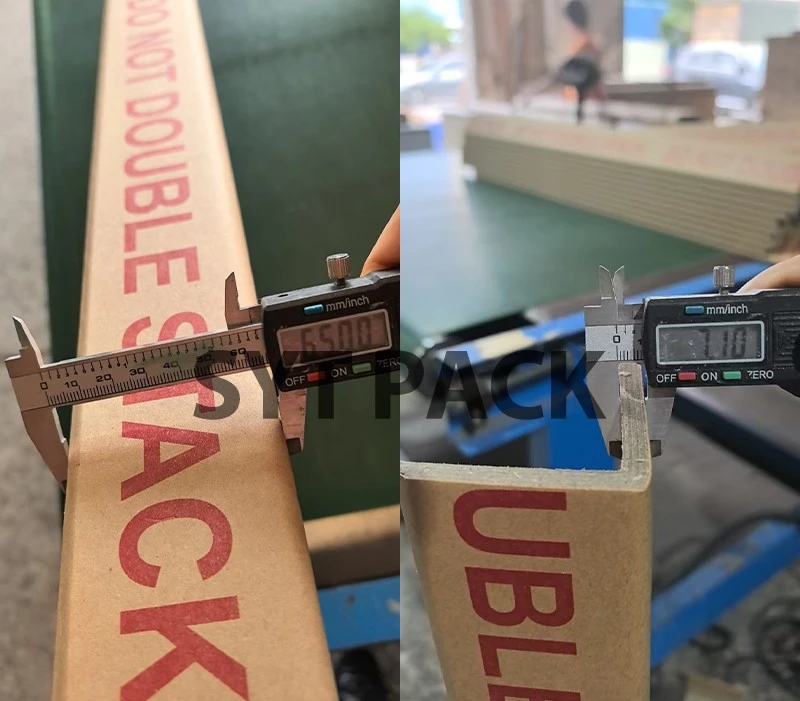
A few simple tools answer most quality questions. With a caliper,we record the actual leg width, thickness and length of each batch and compare them with the agreed drawing—no tolerance left to guesswork. With a handheld moisture meterwe take the reading that goes onto the batch QC report. We also weigh single pieces to confirm consistent density across the order. Before loading, photos and, where requested, a short loading video are sent with the QC sheet, so you see exactly what is on the container.
How fast can you get a cardboard angle sample in Australia?
Samples are typically ready within 3–5 working days, and we send photos or a short video for your confirmation before dispatch. Sample freight is usually the buyer’s cost; terms can be confirmed when you send your RFQ. For a first order, we recommend confirming the sample against your carton or strapping before bulk production—that single step avoids most specification mismatches.
Conclusion
Behind every “cardboard angle” quote there is a factory, but not every factory will show you its floor, its drying line and its QC sheet. Ours is open: custom cutting to your dimensions, double drying to 8%–10% moisture, batch records you can check, and samples within days. Send us your carton size, product weight and destination port—we will come back with a specification and a sample plan. Learn how to start a custom project, by drawing or physical sample, in our [customization guide].
Note: voyage times are typical planning values for China–Australia routes; confirm current schedules with your forwarder.